

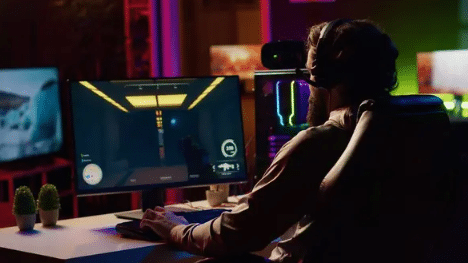
You finish a game, close the tab, and still find yourself thinking about it while scrolling elsewhere. A joke from the chat returns in a video. A strange character becomes a reaction image. Someone explains a shortcut you had never noticed, and suddenly the game feels larger than the screen where it started. That is the odd part of online gaming now — the session ends, but the conversation keeps moving.
The game follows you around online.
The screen stopped being the whole story
Playing online no longer means keeping the experience private. You may watch before joining, discuss a mechanic without touching it, or learn the mood of a community from comments alone.
Around a game, you may notice:
- a reaction becoming a shared joke;
- a useful trick turning into community folklore;
- a private session becoming something worth showing someone else.
Watching became part of playing
You can understand a game through someone else’s choices. A short clip reveals a surprise; a stream shows how people react when plans fall apart.
That changes discovery. You are not only asking whether a game looks enjoyable. You are wondering what kind of moment it might create for other people watching.
Chat creates its own language
Every active community develops shortcuts. A phrase from a memorable mistake becomes shorthand, while a character’s expression can work as a response outside the game.
Honestly, internet humour moves fast. The original reference can disappear, but the joke survives, ready to be reused almost anywhere online.
The lobby feels social
Even when you play alone, menus can carry traces of other people. Rankings, comments, and reactions suggest an audience beyond your session.
That presence need not mean conversation. Knowing others may see the result can change how you choose names, build character, or approach challenges.
Communities give games a second life
A game lasts longer in culture when people add context around it. Guides, fan theories, edits, and arguments keep the material open to readings.
Guides become folklore
A guide rarely stays instructional. After retelling, a clever tactic becomes a story about who discovered it or used it at the wrong moment.
You may search for a slot page because a mechanic looks unfamiliar, then read comments for what the official explanation missed. That extra layer makes practical knowledge sound like folklore to newcomers.
Avatars carry more than identity
An avatar lets you be recognisable without explaining yourself. The choice may reflect humour, nostalgia, or a character you refuse to replace.
Over time, that image gathers associations. Friends recognise it. Strangers remember it from a previous match. A small digital figure begins carrying a social history that would be impossible to see from the game rules alone.
The audience edits the experience
Players do not merely receive a finished game. They clip unusual moments, test odd combinations, remix sounds, and point out details that were easy to miss. Some interpretations become more memorable than the original explanation.
To be fair, that can make a game feel unpredictable from the outside. You may enter through the official doorway, but the community has already built side entrances, shortcuts, and rooms with very different lighting.
Internet culture keeps moving after the session
Online gaming matters because it gives people material to reuse. A game supplies images, language, tension, failure, and tiny moments of shared recognition.
Memes turn mechanics into language
A failed move can become a caption for an unrelated situation. A dramatic victory pose can describe an ordinary success. The reference works because the emotion is recognisable even when the original context disappears.
Weirdly enough, the most durable joke may come from something that was never meant to be funny. A strange animation, awkward sound, or badly timed reaction can become more culturally useful than a polished feature.
Nostalgia keeps getting rewritten
You return to an older game and notice details that once seemed ordinary. The menus feel familiar, the sound brings back a specific mood, and old community language suddenly makes sense again.
A search for an aplikasi slot gacor may begin as a practical lookup, yet online culture often adds memories, comparisons, and personal stories around the search. The technology changes, but the habit of attaching emotion to a game remains.
At some point, the game becomes a place you remember rather than a thing you simply played.
The part that stays open
You may forget the exact objective of a session while remembering who was present, what went wrong, or which phrase everyone repeated afterward. Those details sit outside the formal design, yet they often carry the strongest sense of belonging.
And the boundary keeps shifting. A game can be entertainment, conversation starter, creative material, or shared reference depending on where you encounter it. None of those roles cancels the others.
The interesting question is not whether online gaming belongs to internet culture anymore. It is how much of that culture now arrives through games without announcing itself as gaming at all.