

There’s a particular kind of dread that hits you mid-showroom. Tape measure in one hand, phone calculator in the other, and suddenly every number you measured at home feels completely unreliable. Sound familiar? Wrong sectional sizing isn’t just a minor inconvenience. It means blocked hallways, seating that feels wedged in, and, worst of all, the gut-punch moment when a delivery team can’t get the piece past your front door.
Getting dimensions locked in before you buy is genuinely one of the highest-leverage moves you can make. And the numbers back this up: total retail returns are projected to reach $890 billion in 2024, with oversized furniture consistently ranking among the top culprits. That’s not a statistic to shrug off.
Size Categories That Actually Shape Your Search
Before anything else, you need to understand how sectionals are grouped by size, because walking into a search without that framework is like grocery shopping without a list. You’ll spend time on options that were never going to work.
Compact, Standard, and Large: What These Labels Mean in Practice
A reliable sectional sofa size guide begins here. Compact models typically land in the 75–95 inch range. Standard configurations fall between 95 and 115 inches. Large and oversized builds stretch from 120 inches to 156 inches or more. These aren’t marketing terms; they correspond directly to what different floor plans can realistically absorb.
Don’t overlook chaise length (generally 60–72 inches) and seat depth (21–28 inches for standard; 29–35 inches for deeper lounging profiles). Both numbers influence how much usable floor space your sectional will actually claim, day in and day out.
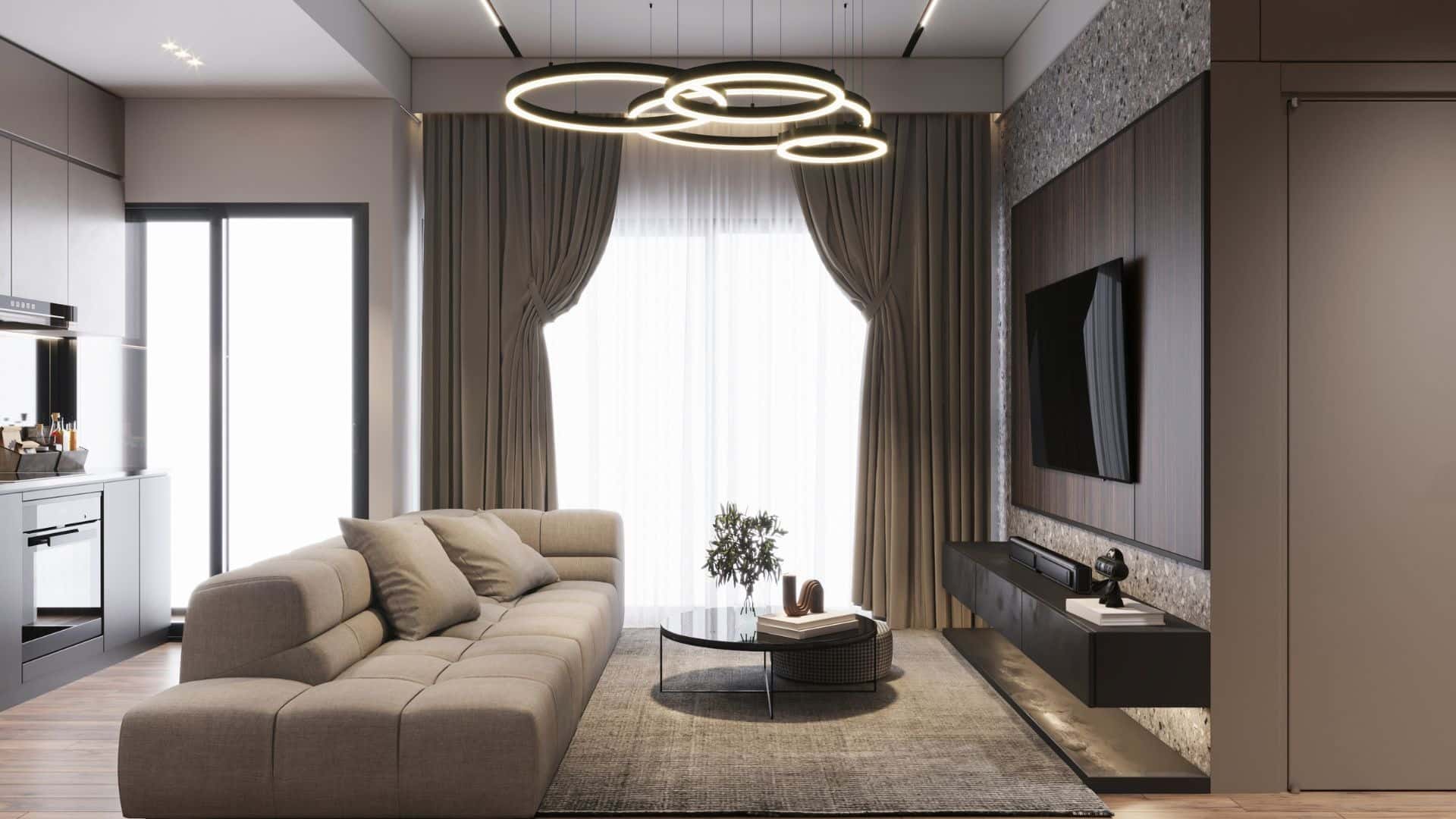
For a grounded visual sense of how these size tiers look in real homes, it’s worth browsing living room sectional sets from a retailer. Seeing living room sectional sets displayed in authentic, styled room settings translates your raw measurements into something tangible, and that context matters more than most buyers expect.
Now that you have a working grasp of each size tier, the real work begins: mapping those numbers against your actual space.
Measure Smart: Don’t Guess, Don’t Eyeball
Dimensions only become meaningful the moment they meet your specific walls, doorways, and daily traffic patterns. Living room sectional dimensions without spatial context are just numbers on a spec sheet.
The Painter’s Tape Method (Designers Use It Too)
Here’s a trick worth stealing from professional interior designers: grab a roll of painter’s tape and mark out the sectional’s full footprint directly on your floor. It takes ten minutes and immediately tells you whether a given size “breathes” in the room or swallows it whole.
Follow that with the two-thirds wall rule. Your sectional shouldn’t consume more than two-thirds of the wall it runs along. That one principle alone eliminates the most common scale errors before they cost you money.
Clearance Distances That Actually Matter
Plan for 30–36 inches on any active walkway. Keep 18 inches between your sectional and the coffee table. If you’re looking at a reclining configuration, account for the footrest extension behind the unit. These aren’t rough approximations; they’re the margin between a room that moves well and one that constantly irritates you.
You’ve measured carefully and marked your floor. But there’s still one more practical hurdle that trips up buyers at the worst possible moment: delivery day.
The Logistics People Overlook (Until It’s Too Late)
Nobody loves talking about delivery path logistics. It’s unglamorous, and it doesn’t show up on a mood board. But when you’re learning how to choose sectional size for your living room, delivery constraints rank near the top of things that bite people hardest.
What the Delivery Path Demands
Measure every doorway, hallway width, and stairwell angle between your curb and your living room, before you place any order. The critical measurement is diagonal depth: the sectional depth when tilted at an angle during the carry-in. That number has to clear every single passage point.
The financial reality of getting this wrong is steep. Returns, unsold inventory, and product misfits account for up to 10% of lost revenue for furniture brands. For buyers, return logistics are a headache at best and an expensive lesson at worst.
Rug Sizing and Visual Anchoring
Position front legs on the rug and allow 8–12 inches of rug to extend past the sectional on visible sides. This framing approach visually anchors the seating zone and prevents furniture from looking like it’s simply been dropped into empty space with no intention behind it.
With clearance and delivery covered, it’s time to think about shape, which is where your actual lifestyle finally enters the conversation.
Choosing the Right Configuration for How You Live
Shape selection is more personal than most guides admit. These sectional layout tips connect configuration choices to real behaviors, not just floor plan geometry.
L-Shapes, U-Shapes, and Modular Options
L-shaped sectionals are the most adaptable format available. Smaller versions (95–110 inches) handle tighter rooms gracefully. Larger L-shapes (130–150 inches) anchor expansive spaces without overwhelming them. U-shaped designs seat 6–9 people and thrive in rooms where conversational flow across the space is a genuine priority. Modular configurations are the strongest choice for open-plan layouts where you need to define a living zone distinctly from a dining or kitchen area.
Where the Chaise End Goes
Chaise sections add excellent lounging value, but placement is everything. Always orient the chaise away from primary foot traffic. Blocking a natural pathway with a chaise defeats its purpose and disrupts daily movement through the room.
Now that shape logic is clear, the final piece is matching all of this to your specific square footage.
Room-by-Room Size Strategy
Personal preference matters. But room dimensions should carry more weight in the final decision. Finding the best sectional size means honest alignment between what you want and what your floor plan can realistically support.
| Room Size | Recommended Sectional | Configuration |
| ≤120 sq ft | 75–95″ compact | L-shape, slim arms |
| 144–250 sq ft | 95–115″ standard | L-shape, standard depth |
| 250+ sq ft | 120–156″+ large/modular | U-shape or modular float |
Smaller rooms call for compact sectionals with slim arm profiles; every inch of bulk matters at that scale. Medium rooms handle standard L-shapes comfortably when the two-thirds wall rule stays in play. Large and open-plan spaces benefit most from modular or U-shaped configurations that define zones independently from the architecture around them.
Styling the Space Once the Size Is Right
Getting the size right is step one. Making it look right is step two, and that’s where many otherwise well-planned rooms fall short. Strong sectional layout tips extend beyond measurements into how you work with negative space.
Float, Zone, and Frame Deliberately
Pulling a sectional even a few inches away from the wall changes the entire energy of a room. It reads as intentional rather than incidental. Pair that floating position with a rug extending 8–12 inches beyond the sectional on exposed sides, and your living area becomes a defined zone, not just a cluster of furniture.
Preserve intentional negative space near windows and architectural features. Overcrowding eliminates the sense of openness that makes a room feel designed rather than simply filled.
Frequently Asked Queestions
What’s the most common furniture placement error?
Pushing everything flush against the walls, often called “wallflower syndrome”, and choosing pieces that are disproportionate to the room. Both habits visually compress the space and break natural traffic flow.
What’s the smallest room that can support a standard sectional?
A 12×14-foot room handles a 100–110-inch sectional comfortably. Compact models (75–95 inches) work in spaces around 10×12 feet when clearances on all sides are respected.
How do you verify a sectional fits through your doorways?
Measure the diagonal depth of the piece when tilted at the angle used during carry-in, then compare that figure against every doorway, hallway, and stairwell turn on the delivery route. Modular sectionals reduce this risk considerably since they arrive in separate sections.
Bringing It All Together
Getting your sectional right comes down to four disciplines executed in sequence: understanding size categories, measuring your actual floor plan, planning delivery clearances, and matching configuration to how you genuinely live. Skip one step, and even a beautifully chosen piece can become a daily source of frustration.
The encouraging part is that none of this requires a design background, just a tape measure, a roll of painter’s tape, and the discipline to follow the numbers before you fall for a style. Do that, and the rest takes care of itself.