

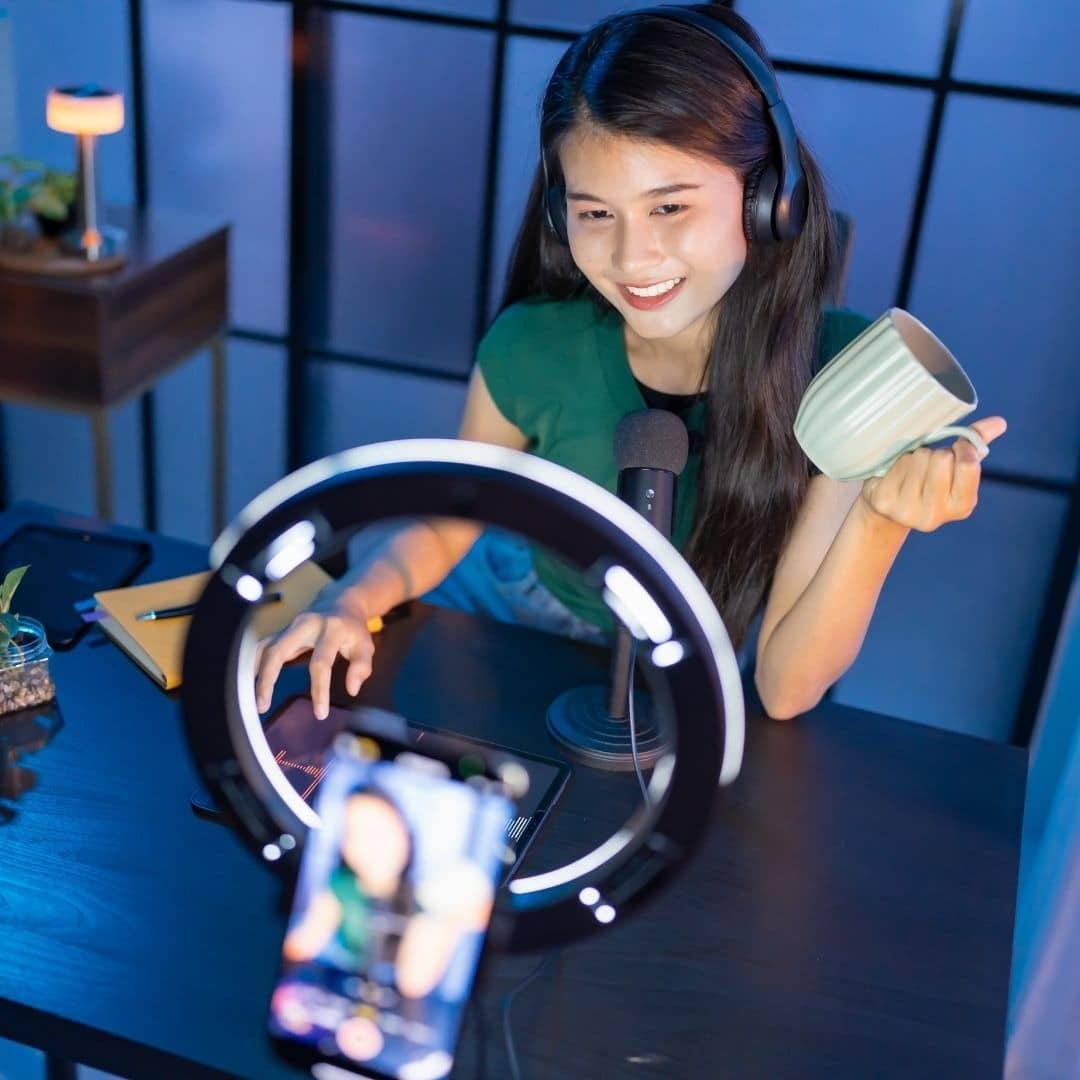
TLDR: The creator economy has split into two groups in 2026. Creators who are building AI-powered business models that run and grow without constant manual input, and those still trading time for content output with no end in sight. This blog breaks down the top 5 creator business models that are only possible because of agentic AI, why POP.STORE is the platform powering many of them, and what you need to start building one today.
The biggest shift in the creator economy over the past two years has not been a new platform or a new content format. It is the emergence of business models that did not exist before AI agents became capable enough to handle multi-step business tasks independently. Creators who spotted this shift early are now building income streams that grow while they sleep, engage audiences they could never personally reach, and deliver personalized experiences at a scale that would have required an entire team just three years ago. The gap between those creators and everyone else is widening every single month.
Echo-Me sits at the center of this shift as the AI platform giving creators the ability to deploy a digital version of themselves that works continuously across communities, platforms, and sales funnels. It is not a chatbot. It is a trained AI twin that sounds like the creator, knows what the creator knows, and handles interactions the creator would otherwise need to handle personally. For business models that depend on personalization at scale, this capability is not a feature. It is the entire foundation.
Here are the top 5 creator business models in 2026 that are built entirely on agentic AI infrastructure.
1. The Autonomous Membership Community
Traditional membership communities fail because creators burn out maintaining them. Members pay monthly expecting engagement, fresh content, and personal access. When the creator cannot show up consistently, retention drops, cancellations spike, and the community collapses under its own expectations.
Agentic AI solves this by becoming the always-on layer that keeps the community alive between the creator’s real appearances.
How the autonomous membership model works:
- The AI twin responds to member questions using the creator’s knowledge base and content library
- New member welcome sequences are triggered and personalized automatically
- Daily conversation prompts are posted on a schedule without the creator writing each one
- Members who go quiet for a set number of days receive a personalized check-in from the AI
- Content recommendations are served based on each member’s activity and interests
Creators running this model through platforms like POP.STORE report retention rates that are significantly higher than communities managed manually, because members experience consistent value delivery even during weeks when the creator is focused on production or simply offline.
2. The Scalable Digital Coaching Business
One-on-one coaching has the best conversion rates and the worst scalability of any creator revenue model. You can only take so many clients. Your income ceiling is directly tied to your available hours. And when you get sick, go on vacation, or simply need a break, revenue stops.
The AI-powered coaching model in 2026 removes that ceiling without removing the personal feel that makes coaching valuable in the first place.
Model structure:
- Creator records their core methodology, frameworks, and answers to the most common client challenges
- All of this content is uploaded into the AI twin’s knowledge base
- A lower-priced AI coaching tier is launched alongside the premium live tier
- The AI twin handles intake calls, progress check-ins, and Q and A sessions for the lower tier
- The creator focuses exclusively on high-value live sessions with premium clients
This creates a two-tier coaching business where one tier scales infinitely and the other maintains the premium positioning. Both generate revenue. Only one requires the creator’s direct time.
3. The AI-Powered Product Launch Machine
Most creators treat product launches as events. Something they have to prepare for, execute manually, recover from, and then start preparing for all over again. The launch cycle is exhausting and the gap between launches is often longer than it needs to be simply because the creator does not have the bandwidth to run another one.
Agentic AI for Creators completely changes how launches are structured. Instead of the creator managing every email, every social post, every follow-up sequence, and every abandoned cart message, an AI agent handles the entire execution layer while the creator focuses on the product and the announcement.
What an AI-powered launch sequence handles automatically:
- Pre-launch waitlist nurturing with personalized messaging based on how each subscriber found the creator
- Launch day email sequencing timed to audience behavior patterns
- Social media posting across platforms without manual scheduling
- Cart abandonment follow-ups triggered within hours of the drop
- Post-purchase onboarding sequences that increase satisfaction and reduce refund requests
- Upsell triggers based on what each buyer purchased
POP.STORE creators using this model report shorter gaps between launches because the execution burden has been removed. When the hard part is handled by agents, creators can launch more often with less stress.
4. The Behavioral Upsell Business
Most creators offer their products to everyone the same way. Same email. Same social post. Same offer. The problem is that a first-time follower and a customer who has bought three times before are completely different people with completely different motivations, and treating them identically is leaving significant revenue on the table.
The behavioral upsell model uses AI to identify exactly where each audience member is in their journey and trigger the right offer at the right moment automatically.
How behavioral upsell AI works in practice:
- A follower who watches four videos on a specific topic receives a targeted offer for the product most relevant to that topic
- A buyer who purchased a beginner-level product three months ago receives an upgrade offer for the advanced version
- A community member who has been most active in discussions about a specific challenge receives a personalized message about a solution product
- A customer who opened five emails but never purchased receives a time-sensitive offer with a specific reason to act now
This kind of precision was previously only possible for large brands with dedicated CRM and marketing automation teams. Agentic AI has made it accessible to individual creators building on platforms like POP.STORE.
5. The Passive Knowledge Monetization Model
Every experienced creator is sitting on years of knowledge that their audience would pay to access in an organized, searchable, conversational format. The problem is that organizing and delivering that knowledge at scale has historically required either a large content team or a creator willing to spend most of their working hours answering the same questions repeatedly.
The passive knowledge monetization model solves this by turning a creator’s existing content into a revenue-generating knowledge product powered by their AI twin.
How to build a passive knowledge product:
- Audit all existing content including courses, podcasts, blog posts, social content, and Q and A archives
- Upload everything into the AI twin’s knowledge base
- Build a paid portal where subscribers ask questions and receive answers sourced from the creator’s actual material
- Price the portal as a monthly or annual subscription
- Let the AI deliver value continuously without the creator adding new content every week
This model works particularly well for creators who have been producing content for several years and have a large back catalog that most of their audience has never fully consumed. The AI makes that catalog interactive and therefore exponentially more valuable.
Why POP.STORE Is Where These Business Models Are Being Built
Building any of these models requires two things working together well. An AI layer that handles engagement, personalization, and automation, and a commerce layer that handles product delivery, subscriptions, and payments. POP.STORE provides the commerce infrastructure that creators need to monetize these AI-powered models without building custom technology from scratch.
Creators who want to understand which infrastructure decisions will support long-term growth should spend time reviewing the best platforms for creators before committing to a platform stack. Getting the foundation right in 2026 determines how much leverage you have as AI capabilities continue to expand over the next few years. The creators building on the right infrastructure today are the ones who will scale fastest when the next wave of agentic AI capabilities arrives.
Frequently Asked Questions
What makes a business model agentic AI dependent? A business model is agentic AI dependent when its core value delivery, audience engagement, or revenue generation relies on AI agents completing multi-step tasks independently rather than a human manually managing each step. Without the AI layer, the model either does not function or requires a team to replace what the agent was doing.
Can small creators with fewer than 10,000 followers use these business models? Yes. Audience size matters less than audience engagement and the clarity of the creator’s niche. A creator with 5,000 highly engaged followers in a specific niche can build a profitable AI-powered membership or coaching business because the AI handles scale on the delivery side regardless of how large the audience is.
How does Echo-Me learn a creator’s voice accurately enough for these models to work? Echo-Me trains the AI twin on voice samples, existing content, and knowledge base material provided by the creator. The more content available for training, the more accurately the twin reflects the creator’s tone, vocabulary, and communication style. Creators with large content libraries typically see more accurate twins from the start.
Is POP.STORE suitable for all five of these business models? POP.STORE supports digital product sales, subscriptions, memberships, and community commerce, which covers the revenue and delivery infrastructure needed for most of these models. Pairing POP.STORE with Echo-Me creates a complete stack for building AI-powered creator businesses.
How much technical knowledge does a creator need to implement agentic AI business models? Platforms like Echo-Me and POP.STORE are built for creators, not developers. The setup processes are designed to be completed without coding knowledge. The main requirement is existing content and a clear understanding of what value the creator wants to deliver to their audience.
What is the biggest mistake creators make when adopting agentic AI for their business? The most common mistake is deploying AI without first defining the audience journey clearly. Agentic AI amplifies whatever system is already in place. If the offer is unclear, the messaging is inconsistent, or the audience journey is poorly structured, the AI will execute those problems at scale rather than solving them. Getting the strategy right before deploying the AI is what separates successful implementations from disappointing ones.
Leave a Comment