

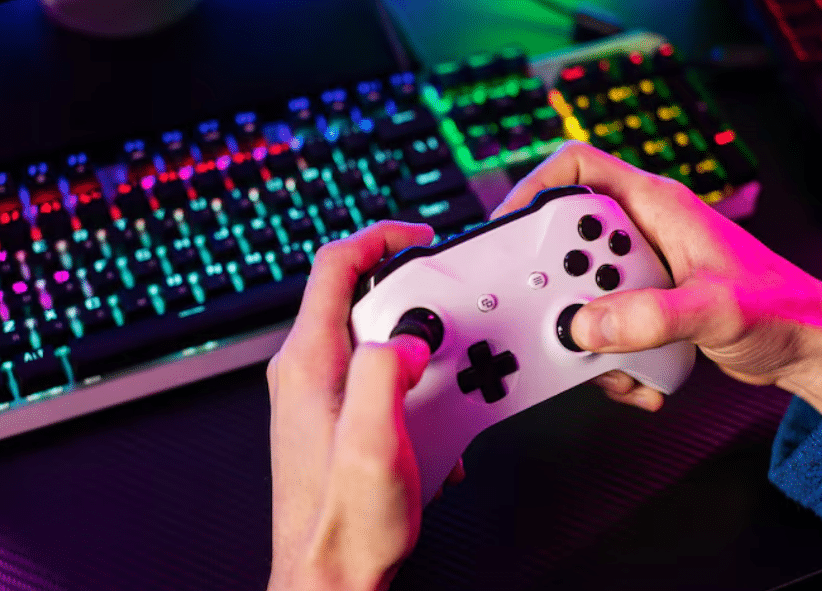
Modern games have become remarkably good at making time disappear. A player may sit down intending to play for twenty minutes, only to look at the clock and discover that an hour has passed. The experience can feel surprisingly brief, even when the actual session has lasted much longer.
This is not simply a matter of distraction. Contemporary game design combines pacing, reward systems, interface choices, social interaction, and psychological engagement in ways that can significantly alter how players perceive time.
Understanding why this happens helps explain one of the most distinctive features of modern gaming: long sessions that rarely feel as long as they actually are.
Games Reduce the Number of Natural Stopping Points
Older games often created obvious moments to stop. A level ended, a race finished, a character lost all remaining lives, or a save point appeared. These interruptions gave players a clear opportunity to decide whether to continue.
Many modern games deliberately create smoother transitions.
Instead of ending one activity completely, they immediately introduce another objective. A completed mission may unlock a reward, which increases progress toward a challenge, which then reveals another task. Multiplayer sbobet games may automatically begin matchmaking for the next round before players have fully processed the previous one.
This creates what can be described as a continuous activity loop.
The player rarely receives a strong signal saying, “This is a good place to stop.” Each activity connects naturally to the next, making a forty-minute session feel like several small decisions rather than one long block of play.
Short Gameplay Loops Create the Illusion of Quick Progress
Modern games often divide progress into small, achievable goals.
A player might need to:
- complete one match;
- earn a small amount of experience;
- unlock one cosmetic item;
- finish a daily challenge;
- collect a resource;
- reach the next checkpoint.
Individually, these objectives may require only a few minutes. The problem is that completing one often places the player close to completing another.
Imagine finishing a match and discovering that a progress bar is now at 85 percent. Playing “just one more game” seems reasonable. That next match might then unlock another reward or challenge.
The player is not necessarily deciding to spend another hour gaming. Instead, they repeatedly decide to spend another five or ten minutes.
Those small decisions accumulate quickly.
Immersion Changes How People Experience Time
Time perception is strongly influenced by attention.
When people are bored or waiting for something, they tend to notice time passing. Five minutes in a queue can feel unusually long because attention is focused partly on the waiting itself.
Gaming creates almost the opposite condition.
Players may simultaneously monitor movement, objectives, enemies, dialogue, maps, resources, teammates, sound cues, and strategic decisions. Because attention is directed toward the game rather than toward the clock, awareness of passing time becomes weaker.
Highly immersive situs slot gacor games intensify this effect by maintaining constant cognitive engagement.
Open-world exploration, competitive matches, survival systems, strategy games, and narrative-driven experiences can all keep the brain occupied with continuous decisions. When attention remains focused for extended periods, the session may feel shorter in retrospect.
Reward Systems Encourage Continuous Play
Many modern games contain frequent reward mechanisms designed to maintain motivation.
These can include experience points, achievement notifications, item drops, ranking systems, battle passes, unlockable characters, daily missions, and progression bars.
Importantly, rewards do not always need to be large.
Frequent small rewards can create a strong sense of momentum. Players constantly feel that something is happening: a level is increasing, an item is becoming available, or a challenge is getting closer to completion.
Progress bars are particularly effective because unfinished progress naturally encourages completion.
A player who sees 950 out of 1,000 points may feel much more motivated to continue than someone who simply sees a completed task. The remaining 50 points appear small enough to justify another round.
Multiplayer Games Add Social Pressure
Gaming sessions can also become longer because stopping is no longer an individual decision.
In multiplayer games, players often participate with friends, teammates, guild members, or online communities. Leaving may mean interrupting a group activity or missing the next match.
Social conversations can extend the session further.
Players may remain online between matches simply because they are talking to friends. The game effectively becomes both entertainment and a social environment.
This makes time harder to track because the session is not experienced as one continuous activity. It alternates between gameplay, conversation, waiting, planning, and competition.
Two hours can therefore feel like several short interactions rather than one long gaming session.
Faster Loading Keeps Players Inside the Experience
Technical improvements have also reduced downtime.
Older games often involved lengthy loading screens, physical disc changes, complicated menus, or noticeable delays between sessions. These pauses gave players time to become aware of their surroundings and reconsider whether they wanted to continue.
Modern hardware, solid-state storage, persistent online worlds, quick matchmaking, and streamlined interfaces increasingly eliminate those interruptions.
Ironically, faster games can lead to longer sessions.
When the next activity starts almost immediately, there is less opportunity for the player’s attention to shift away from the screen.
Games Are Designed Around Session Retention
Many modern games operate as ongoing services rather than standalone experiences.
Developers regularly introduce seasonal events, rotating challenges, limited-time rewards, ranked systems, and daily objectives. These systems give players reasons not only to return regularly but also to remain engaged once they start playing.
This does not mean every design feature exists solely to keep people playing indefinitely. Many progression systems genuinely make games more satisfying.
However, when several engagement mechanisms operate together, they can substantially reduce a player’s awareness of session length.
The Clock Has Not Changed, but the Experience Has
Modern gaming sessions often feel shorter because games minimize interruption while maximizing attention, progression, and momentum.
Short objectives encourage one more attempt. Reward systems make progress visible. Multiplayer environments add social motivation. Faster technology removes pauses, while immersive worlds keep attention focused.
None of these elements changes how much time actually passes.
They change how strongly players notice it.
That distinction explains why someone can begin playing in the early evening, complete what feels like a handful of small activities, and suddenly realize that several hours have disappeared. Modern games have become extremely effective at turning long periods of real time into experiences that feel surprisingly brief.