

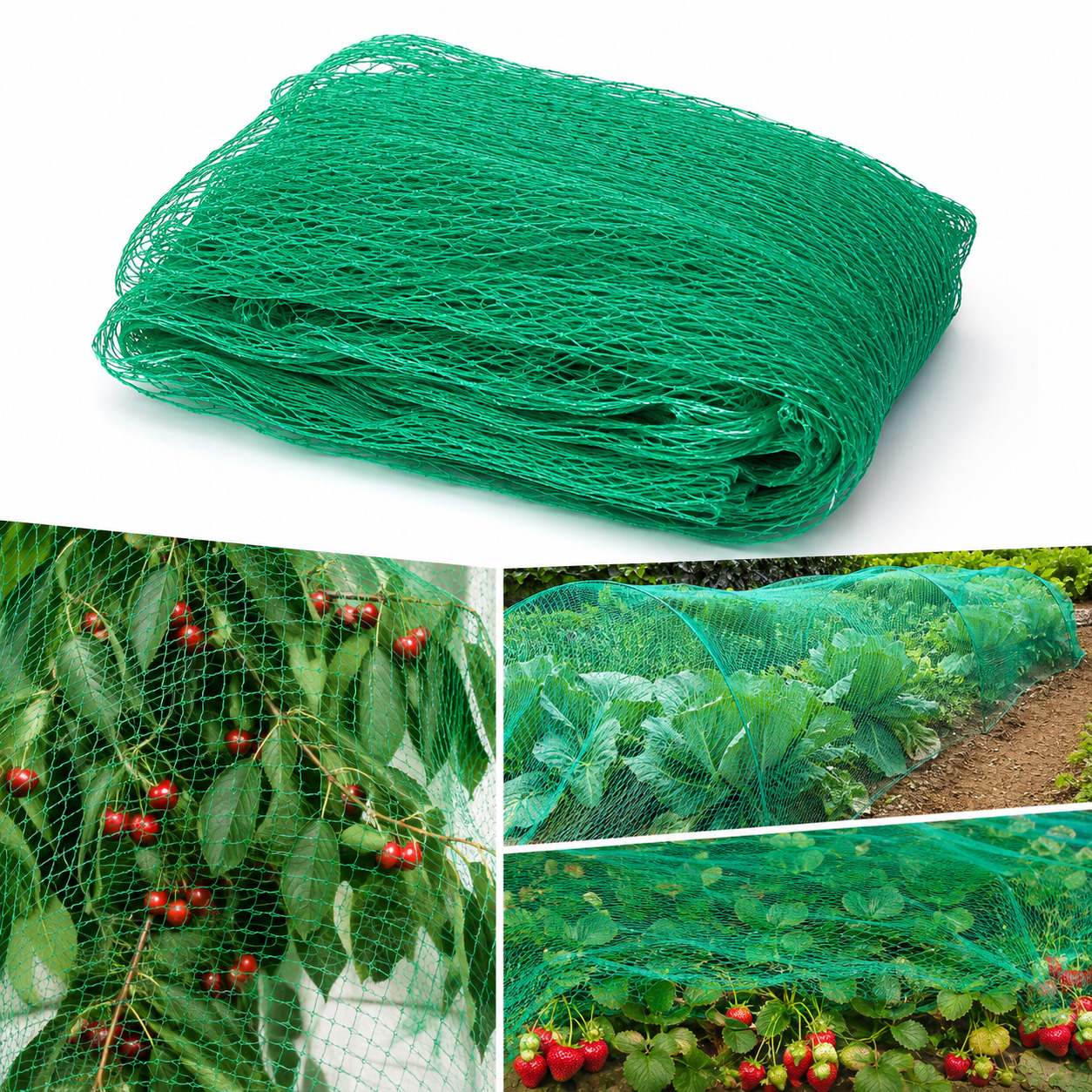
It’s fun to grow fruits and vegetables at home. Each day, you plant seeds and water them while you watch. But then the birds may come at the time of ripening. Soft fruit pecking and fresh leaves pulling are their habits. It is upsetting after weeks of hard work. Because of this, several gardeners will use Bird Netting to protect plants.
Use bird netting to protect your yard from hungry birds or animals. It covers fruits and vegetables like a shield. Birds are able to see the plants but not reach them. Keep your crops safe without killing wildlife.
Bird netting is a great option to ensure healthy and full harvests. It provides you with peace of mind while helping your garden thrive.
Why Birds Target Fruits and Vegetables
Birds are in search of easy food. They are attracted to soft fruits like strawberries, grapes, and cherries. They also feed on tender leaves and young shoots. Birds will keep coming back when food is easily accessible.
A few birds can bring about great devastation. They might consume parts of the fruit or strike it with force. Fruits become rotten quickly when damaged. This encourages more waste and less produce for you.
When you put bird netting over your plants, you’re blocking access before damage occurs. It is preferable to safeguard your garden early rather than to rectify issues later.
How Bird Netting Works
Bird netting is manufactured using lightweight yet durable material. It has a few small holes and lets air and light through. At the same time, it prevents birds from coming too close to your crops.
You can also use Garden Netting to shield a fruit tree, vegetable bed, or bushes. The barrier created is not crossable by birds. They do not harm bycatch. It merely prevents them from accessing the food.
Many gardeners also use frames or hoops under the net. They lift the net above the plants. It provides enough space for fruits to develop and prevents the net from making contact with leaves.
When used in the right way, bird netting will stop birds from accessing your garden without blocking light or rain.
Safe and Humane Garden Protection
Some individuals are afraid to hurt birds. Bird netting provides a kind of solution. It does not trap or injure birds when installed properly. It simply gives access to your crops.
The net must be secure and tight. Loose netting can create gaps where birds may get stuck. A good bird netting system protects all plants and birds.
This way, you will respect nature when protecting your harvest. Birds can search for food elsewhere as your garden remains productive.
Perfect for Many Types of Crops
Bird netting is advantageous for many fruits and vegetables. Berries, tomatoes, and leafy greens are ideal for it. Having good coverage will also benefit fruit trees.
If you grow grapes or blueberries, using bird netting can potentially save most of your harvest. If there is no protective covering, then birds will eat the fruit before it comes to maturity.
You can easily cut bird netting to fit smaller beds or larger gardens. You can also shape it to fit individual plants. It is suitable for home gardens of every conceivable size.
Easy Installation for Home Gardeners
Gardeners love bird netting for easy setup. To begin, measure the area to be covered. Subsequently, put the net over the plants or frame. Use garden pegs or weights to secure edges.
Ensure all sides are securely closed. Birds are clever and will search for small openings. Once everything is sealed, your crops will be protected.
When you finish harvesting, you can remove the bird netting. You can fold it easily and store it for the next season. It is therefore reusable and cost-effective.
Protecting Against More Than Birds
Bird netting keeps birds away, but some gardeners think about insects, too. Although the butterfly is beautiful, its larvae damage leaves. At times, some gardeners use Butterfly Nets for small plants to prevent the laying of eggs.
Usually, the netting for butterflies is finer. They allow air and light in and block tiny pests. Butterfly nets provide careful handling for delicate, soft vegetables.
In case you need to protect a larger area, you can make use of bird netting. For fragile plants, butterfly nets can keep pests at bay. Using them together to have a healthy garden.
Strong and Weather Resistant
The garden is buffeted by wind, rains and sun. Bird netting can operate well in outdoor conditions. Netting of good quality does not get ripped easily. You will likely stay strong on windy days.
Bird netting is lightweight, so it won’t weigh down branches. Under it, plants can grow naturally. Water from the rain will get through, so don’t take off the net when it rains.
Butterfly nets are lightweight and do not prevent natural lighting. They safeguard vegetation and help it breathe and grow. Choosing sturdy materials guarantees your netting will serve you for many seasons.
A Cost-Effective Way to Save Your Harvest
Birds can be expensive when they steal your produce. If you miss these essential gardening tips, all your work may go in vain. This loss is prevented with bird netting.
Bird netting is cheap if we compare it with others. You can install it easily using ordinary tools. You can cover a wide area without spending too much.
Butterfly nets are also very affordable. Extra protection for young plants and seedlings. Either way, you are protecting your investment in your garden. The money saved from crops that cannot be preserved justifies the cost of netting.
Conclusion
Nothing is better than picking fresh fruits from your own garden. But you have to safeguard your plants to enjoy that. Bird netting provides basic and effective protection for fruits and vegetables.
Adding bird netting early in the growing season stops damage before it affects the crop. The use of butterfly nets helps keep caterpillars away. A safe growing space is created by these solutions.
When properly protected, your garden will yield healthy and full harvests. Use bird netting to protect your plants and butterfly nets to avoid damage to crops. Ultimately, you enjoy the rewards of your struggle without any anxiety or fear.