

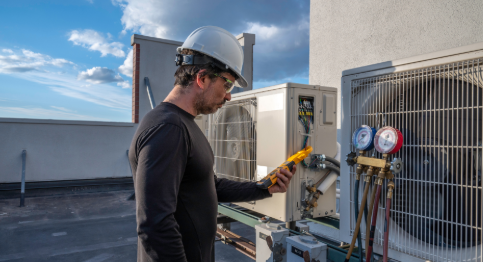
Your HVAC system doesn’t announce when something’s wrong. It just… struggles. And while it struggles, your energy bills creep upward, certain rooms become unbearable, and strange sounds start echoing through the vents. These aren’t coincidences. They’re warnings. Catching these HVAC efficiency signs early is the difference between a minor service call and a full system replacement. Here’s what deserves your attention before things get expensive.
HVAC Inefficiency Signs You Genuinely Shouldn’t Overlook
Your home talks to you constantly. Most people just aren’t listening for the right things. Once you know what to watch for, spotting early trouble becomes second nature.
Your Energy Bills Keep Climbing Without Explanation
This one hits homeowners first, and hardest. When your monthly bill jumps noticeably, but your household habits haven’t changed, something is eating efficiency somewhere. According to ENERGY STAR, duct leaks alone can slash heating and cooling performance by up to 20 percent. That’s real money, gone every single month.
Here’s the smarter move: compare bills season over season rather than just month to month. Seasonal patterns reveal what single snapshots miss entirely.
For Utah homeowners dealing with dramatic temperature swings, particularly during the shoulder seasons, working directly with duct sealing companies is a genuinely practical investment. Professionals in this space deliver targeted results that often show up on your very next utility bill. It’s not a vague promise; it’s a measurable outcome.
Rooms That Can’t Agree on a Temperature
One bedroom feels like a walk-in freezer. The living room? A greenhouse. If that sounds familiar, you’re looking at a classic symptom of an HVAC system losing efficiency, typically rooted in duct leaks or restricted airflow somewhere along the line.
Try this yourself: walk through each room and hold your hand near the vents. Weak airflow in some areas, while others feel perfectly normal, tells you exactly where to start looking. It’s a low-tech diagnostic that genuinely works.
Strange Noises, Odd Smells, and Constant Cycling
Banging or rattling from your system isn’t just irritating it signals mechanical stress building up over time. A musty smell often points to moisture accumulation or dirty components. Burning odors? Take those seriously immediately.
Short cycling is the one that really costs you. When your system starts and stops every few minutes rather than completing full runs, it’s straining the compressor while burning through energy at an alarming rate. This is one of the clearest answers to the question of how to tell if HVAC is inefficient: it’s loud, persistent, and impossible to ignore once you know what you’re hearing.
Understanding the symptoms matters. But knowing *why* they happen? That’s what lets you actually fix them for good.
What’s Actually Causing These Home HVAC Problems
Most home HVAC problems don’t appear suddenly. They build quietly from overlooked causes that compound on each other until something breaks or your bill breaks you first.
Duct Leaks, Cracks, and Hidden Blockages
A report claims that duct sealing-related defects account for 30 percent of HVAC efficiency loss complaints from OEM customers. Think about that number for a moment. Nearly a third of complaints trace back to something most homeowners never inspect.
Cracks at duct joints push conditioned air straight into attics, crawl spaces, and wall cavities, spaces that don’t need climate control and never benefit from it. A professional inspection pinpoints where air is escaping with far more precision than any guesswork allows.
Dirty Filters, Coil Buildup, and Aging Equipment
A choked filter doesn’t just reduce airflow; it forces your entire system to compensate. Most filters need replacing every 30 to 90 days, depending on household conditions, yet plenty of homeowners stretch that to six months or longer. Dirty evaporator coils compound the problem, pushing run times longer just to hit your thermostat’s target.
Equipment older than 10 to 15 years is often running at a fraction of its original rated efficiency. Smart thermostats help stretch an aging unit’s usefulness, but there’s a real ceiling to that approach. Eventually, hardware age wins.
Insulation Gaps and Sizing That Was Never Right
Even flawless ductwork can’t overcome insulation that’s failing. Heat intrudes during summer and bleeds out during winter, putting your HVAC in a constant losing battle with the building envelope itself.
Improper sizing might be the most underappreciated cause of all. An oversized unit short-cycles relentlessly. An undersized one never stops running. Both paths lead to an HVAC system losing efficiency that maintenance visits alone cannot correct.
DIY Checks vs. Professional Assessment: A Real Comparison
| Factor | DIY Check | Professional Assessment |
| Cost | Low to none | Moderate investment |
| Accuracy | Surface-level | Comprehensive |
| Tools Required | Thermometer, flashlight | Blower door, pressure gauges |
| Best For | Initial red flags | Diagnosing root causes |
| Outcome | General awareness | Actionable repair plan |
Practical Steps That Actually Move the Needle
Knowing the problem is only useful if you act on it. These targeted steps give you real traction without guesswork.
Walk Your Home With Purpose
Go room by room. Note temperature differences, put your hand near every vent, and listen carefully during system cycles. This walkthrough surfaces patterns that reveal signs of HVAC inefficiency before repair bills do. Adding smart sensors to problem rooms deepens your visibility. Real-time temperature and humidity data show exactly when and where your system falls short.
Make Seasonal Maintenance Non-Negotiable
Twice-yearly professional service before cooling season and before heating season catches compounding issues while they’re still minor. A qualified technician checks coils, refrigerant levels, and system pressure in ways no DIY inspection can replicate.
If you’re serious about HVAC performance, contacting duct sealing companies for a professional ductwork evaluation is one of the highest-return moves available to homeowners. The energy savings typically recover the cost within a single heating or cooling season.
Quick Answers to Common HVAC Efficiency Questions
How do I spot underperformance without professional equipment?
Watch your energy bill closely, walk each room checking for temperature inconsistencies, and listen during operation cycles. Those three observations catch most early warning signs before they escalate.
Do duct leaks cause both discomfort and higher bills simultaneously?
Yes, and that’s precisely what makes them costly to ignore. Leaky ducts redirect conditioned air away from living spaces, forcing longer run times. Discomfort and expense arrive together.
How frequently should HVAC maintenance or duct inspections happen?
Twice annually is the standard. Once ahead of summer, once before winter. Homes with older systems or stubborn comfort issues often benefit from more frequent professional attention.
The Bottom Line on Your HVAC’s Efficiency
Comfort and operating costs are inseparable from how well your system actually performs day to day. Staying alert to HVAC efficiency signs, rising bills, uneven temperatures, strange sounds, and persistent cycling keeps you ahead of failures rather than reacting to them. Duct leaks, aging components, and insulation gaps are the usual culprits, and most have straightforward, cost-effective solutions. Don’t wait for a breakdown to motivate action. Address the signals early, and your system will return the favor with reliable, efficient performance for years ahead.
Leave a Comment