

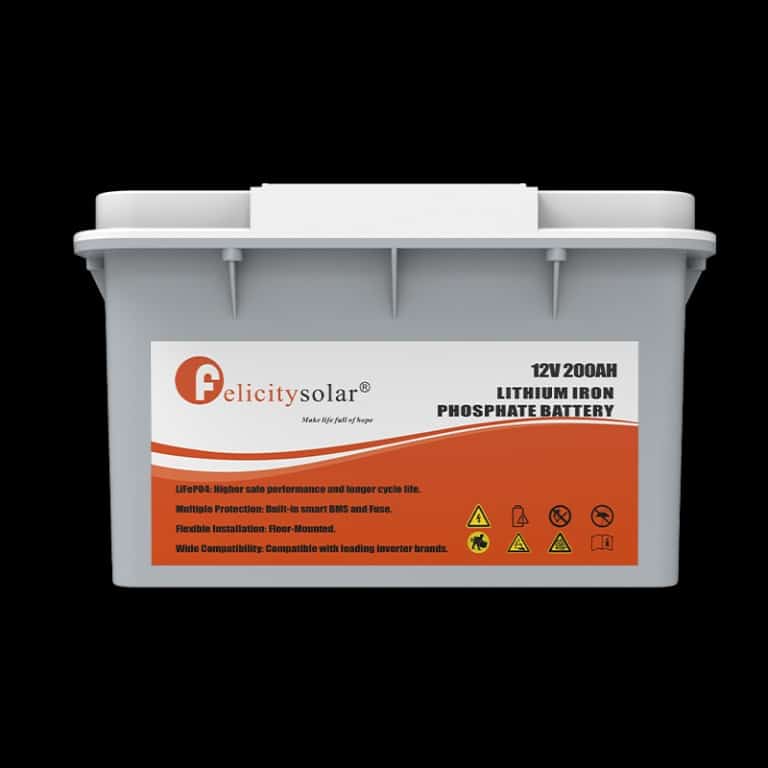
Storage Is Not Just a Residential Story
The public narrative around solar energy storage tends to focus on residential installations — the household with rooftop solar and a garage-mounted battery pack. But the commercial and industrial application of lithium ion solar battery technology is at least as significant, and in many ways more economically interesting, than the residential market.
From small retail businesses to large industrial facilities, the economics and operational benefits of combining solar generation with intelligent battery storage are compelling across a wide range of commercial contexts.
Peak Demand Shaving
For most commercial and industrial electricity customers, the electricity tariff includes a demand charge component — a charge based not on total energy consumption but on the maximum power drawn during a billing period, typically measured over a short window like fifteen or thirty minutes. Demand charges can represent 30–50% of a commercial electricity bill for businesses with spiky load profiles.
A lithium ion solar battery system configured for demand management monitors real-time power consumption and discharges stored energy to clip peaks before they drive up the demand charge. Even relatively modest storage capacity can deliver significant demand charge savings for businesses with occasional but regular consumption spikes.
Energy Resilience for Business-Critical Operations
For businesses where power continuity is operationally critical — data centres, healthcare facilities, food processing operations, precision manufacturing — conventional UPS and backup generator systems are the established solution. Battery storage systems are now entering this space as a complement or partial replacement, offering faster response times than generators and lower operating costs than traditional UPS installations.
The integration of a lithium ion solar battery into a business resilience strategy typically involves defining the loads that must be maintained during an outage, sizing the battery for the required backup duration, and designing the switchover architecture to ensure seamless transition when grid power fails.
Agricultural Applications
Agriculture offers a distinctive application environment for solar and storage. Farms typically have substantial roof or ground area available for solar panels, often have significant daytime energy loads — irrigation pumps, refrigeration, grain processing equipment — and may be in locations where grid reliability is poor or grid connection costs are high.
A well-designed solar and lithium ion solar battery system for an agricultural property can dramatically reduce electricity costs, improve operational resilience during outages, and provide economic stability against rising grid electricity prices — all of which contribute meaningfully to farm profitability.
Containerised Battery Systems for Larger Scale
At the larger commercial and utility scale, lithium ion battery storage is deployed in containerised systems — standardised shipping containers housing battery racks, inverters, and thermal management equipment. These systems can be deployed quickly, scaled modularly, and relocated if needed, making them well-suited to a range of commercial and community-scale storage applications.
The same fundamental lithium iron phosphate chemistry that powers residential batteries is used in many commercial containerised systems, though the engineering of the thermal management, protection systems, and energy management software is considerably more sophisticated at commercial scale.
The Business Case
The commercial economics of solar and storage vary significantly by location, tariff structure, and business energy profile, but the combination of falling battery costs, rising grid electricity prices, and improving financial incentives in many markets has made the business case compelling for a growing range of commercial applications. Businesses that invest the time in a rigorous, data-driven analysis of their energy profile and the available storage options are typically finding that the numbers support investment.