

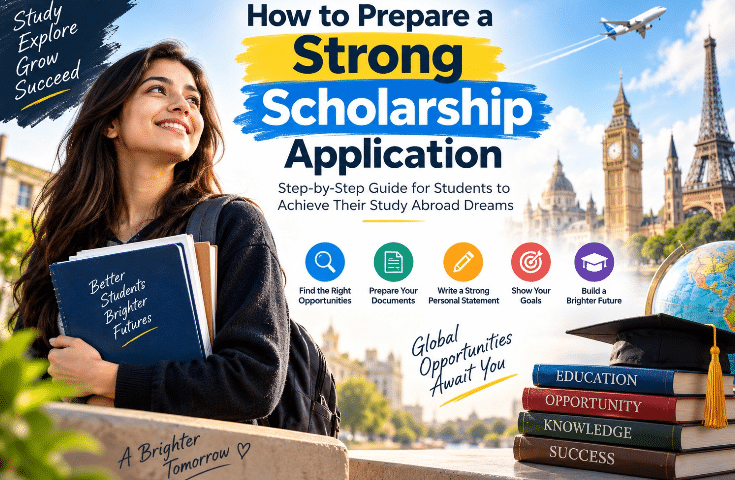
Applying for a scholarship can open the door to valuable educational opportunities, especially for students who want to study at universities abroad. However, scholarship programs can be highly competitive, and submitting a basic application is often not enough. A well-prepared application should clearly demonstrate your academic achievements, personal motivation, future goals, and potential contribution to your field or community
Whether you are applying for an undergraduate, master’s, or doctoral program, preparing your application carefully can help you present yourself as a strong candidate. The following steps can help students organize their applications and avoid common mistakes.
Start Your Scholarship Search Early
One of the most important steps is to start looking for scholarships well before the application deadline. Many students wait until the last few weeks, only to discover that they need documents, recommendation letters, language test results, or other information that takes time to obtain.
Start by creating a list of suitable opportunities and compare their eligibility criteria, deadlines, funding coverage, and application requirements. Students can also explore a list of international scholarships to discover different scholarship opportunities and identify programs that match their academic goals.
Always verify the latest information on the official website of the scholarship provider before applying, because requirements and deadlines can change.
Check the Eligibility Requirements Carefully
Before spending time preparing an application, make sure you meet the basic eligibility requirements. Scholarships may have specific requirements related to nationality, academic qualifications, degree level, field of study, age, work experience, or Englishlanguage proficiency.
Create a simple checklist containing:
• Required academic qualification
• Minimum GPA or grades
• Eligible countries
• Degree level
• Field of study
• English-language requirements
• Work or research experience
• Required documents
• Application deadline
This approach prevents you from spending valuable time on scholarships for which you are not eligible.
Prepare Your Documents in Advance
Scholarship applications often require several supporting documents. These may include academic transcripts, degree certificates, CVs, recommendation letters, language test results, personal statements, and copies of identification documents.
Request official documents early. Some universities and institutions may take several days or weeks to provide transcripts or certificates.
It is also useful to keep all your documents in an organized digital folder. Use clear filenames and make sure the documents are available in the formats required by the application system.
If a document needs to be translated, certified, or notarized, complete that process before the application deadline approaches.
Build a Strong Academic Profile
Academic performance is an important part of many scholarship applications. Your grades demonstrate your ability to succeed in an academic environment, but scholarship committees may also consider other achievements.
Keep a record of your academic and extracurricular accomplishments, including:
• Academic awards
• Research projects
• Publications
• Academic competitions
• Certifications
• Volunteer work
• Leadership activities
• Student organizations
• Internships
• Professional experience
When presenting these achievements, focus on quality and relevance rather than simply creating a long list.
Write a Personal Statement With a Clear Purpose
The personal statement is one of the most important sections of many scholarship applications. It gives the selection committee an opportunity to understand who you are beyond your grades and qualifications.
Avoid using the same generic statement for every scholarship. Instead, adapt your statement to the specific opportunity and explain why it matches your academic and professional goals.
A strong personal statement can explain:
• Why you selected your field of study
• What motivates you academically
• Important challenges you have overcome
• Your most meaningful achievements
• Why you are applying for the scholarship
• How the scholarship will support your goals
• What you hope to contribute in the future
Use specific examples whenever possible. Instead of simply describing yourself as a hardworking or ambitious student, explain an experience that demonstrates these qualities.
Explain Your Future Career Goals
Scholarship committees want to know how the opportunity fits into your long-term plans. Therefore, applicants should explain their career goals clearly.
Think about where you want to be after completing your degree. What skills do you want to develop? How will your education help you solve problems or contribute to your profession or community?
For example, a student interested in environmental science could explain how advanced education will help them develop expertise in sustainability and contribute to environmental projects in their home country.
Your goals should be realistic and connected to your previous academic or professional experiences.
Choose the Right People for Recommendation Letters
Many scholarships require one or more recommendation letters. These letters can provide an independent perspective on your academic abilities, character, leadership, research potential, or professional experience.
Choose recommenders who know your work well. A professor who supervised your research or an employer who worked closely with you can often provide more meaningful information than someone who only knows you casually.
Give your recommenders enough time. It is also helpful to provide them with your CV, personal statement, scholarship information, and career goals so they can write a more relevant recommendation.
Improve Your English and Communication Skills
Students applying for international scholarships may need to demonstrate English proficiency. Depending on the program, applicants may be asked to provide IELTS, TOEFL, or another accepted language test.
Even when a formal language test is not required, strong communication skills can improve your application. A clear personal statement, professional CV, and well-written responses can make your application easier for the selection committee to understand.
Regular reading, writing practice, and academic communication can help students become more confident when applying to international programs.
Look Beyond Scholarships
Scholarships are an important way to support higher education, but students should also consider other opportunities that can strengthen their academic and professional profile.
Internships, volunteer work, research projects, and professional training can provide valuable experience. Students interested in gaining practical international experience can also explore international internship opportunities that match their academic and career interests.
Relevant experience can help students develop practical skills while also giving them stronger examples to discuss in future scholarship applications.
Research the Scholarship Provider
Before submitting an application, take some time to understand the organization offering the scholarship. Learn about its objectives, values, eligible study programs, and selection criteria.
For example, students researching opportunities such as Fulbright Scholarships should understand the program’s requirements and application process before preparing their documents.
This research can also help you write a more targeted personal statement. When you understand what a scholarship program is looking for, you can explain more clearly why your background and goals make you a suitable candidate.
Avoid Common Scholarship Application Mistakes
Even a strong candidate can weaken their application through avoidable mistakes. Common problems include submitting incomplete documents, missing deadlines, providing incorrect information, using a generic personal statement, and failing to proofread the application.
Another mistake is exaggerating achievements. Everything included in your application should be accurate and, where necessary, supported by documentation.
Take time to review your application several times before submitting it.
Create a Final Application Checklist
Before clicking the submit button, review every requirement one final time.
Your checklist should include:
• Eligibility confirmed
• Application form completed
• Personal statement reviewed
• CV updated
• Academic documents uploaded
• Recommendation letters arranged
• Language test results included if required
• Additional essays completed
• Application deadline confirmed
• All information checked for accuracy
If possible, ask a teacher, mentor, colleague, or trusted person to review your application. A second pair of eyes can identify errors or unclear sections that you may have missed.
Conclusion
Preparing a strong scholarship application takes time, research, and careful planning. Students should begin their search early, understand the eligibility requirements, organize their documents, and create an application that clearly communicates their academic achievements and future ambitions.
A successful application is not simply about having excellent grades. Your motivation, experiences, leadership, communication skills, career plans, and potential contribution can also help distinguish your application from other candidates.
By preparing carefully and presenting your story honestly, you can submit a more professional and convincing scholarship application and improve your chances of being considered for valuable educational opportunities.
Leave a Comment