

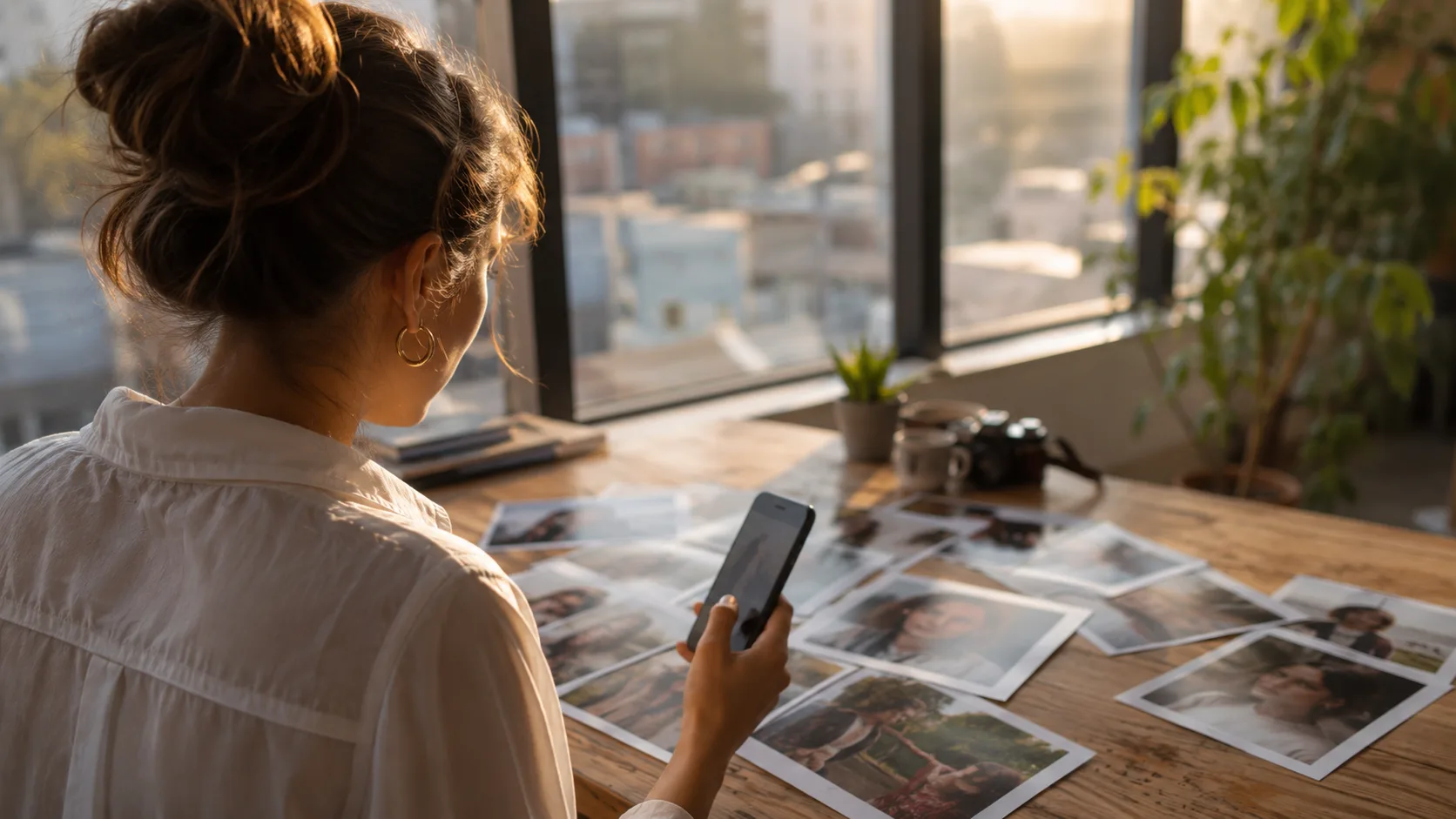
Most people spend an hour polishing their bio and about ninety seconds picking their photos. Then they wonder why nobody swipes right. Your bio is a tiebreaker at best. Photos do almost all of the work, and most profiles get them wrong in the same handful of ways. The encouraging part: choosing dating profile pictures is a learnable skill, not a genetic lottery, and the fix takes one afternoon.
Your Photos Decide Before Your Bio Gets Read
A researcher at Kennesaw State University, Minhao Dai, found that roughly 75% of swipe decisions come down to photos alone. Some industry studies put the number closer to 90%. Either way, by the time someone taps to read your bio, the decision is mostly made.
This changes how you should think about your profile. The bio matters for conversation quality later, but the photo lineup is the gate everything else has to pass through. A mediocre photo set with a witty bio loses to a strong photo set with two lazy sentences, and it is not close.
There is a second number worth knowing. Profiles with four to six varied, high-quality photos get about 38% more matches than profiles running one to three. Variety is doing real work in that statistic. Six photos in the same bathroom mirror count as one photo, repeated.
The Three Photos Every Profile Needs
Before you worry about anything advanced, get these three shots right.
A clear headshot leads. Your first photo should show your face plainly, in good light, with a genuine smile. No sunglasses, no ski goggles, no group shot where the viewer has to guess which one is you. Smiling photos alone earn around 14% more right swipes than serious ones, which makes smiling the cheapest profile upgrade that exists.
A full-body photo goes second or third. People notice when it is missing, and they assume the worst when they notice. It does not need to be a gym shot. Standing at a market, walking a trail, leaning against a railing: anything honest works better than cropping yourself out of a wedding photo.
An interest photo rounds out the core. This is you doing something you actually do. Cooking, climbing, painting, standing knee-deep in a river holding a fishing rod. Interest photos carry conversation bait inside them. A match who opens with a question about your photo is already halfway to a real conversation.
Fill the remaining two or three slots with a social shot (one, not five) and a change of scene: different outfit, different setting, different time of day.
Should You Use AI-Generated Photos?
Two years ago this question felt like asking whether it is okay to cheat. In 2026 it is closer to asking whether it is okay to get a haircut before taking pictures. AI dating photos have gone mainstream because they solve a real problem: most people do not have a friend with a camera, an eye for light, and a free Saturday.
A generator takes a handful of selfies and returns a full set of dating photos, usually 80 to 180 images across dozens of scenes, in 20 to 30 minutes. Pricing runs $29 to $79 one-time, a fraction of what a photographer charges, and you get coffee shop, city street, and hiking trail settings without leaving your couch.
Three honest rules if you go this route. First, keep it recognizable. The photo has to look like the person who shows up to the date, and better tools score each image for realness on a 0-100 scale so you can drop anything that drifts into uncanny territory. If a photo scores like a magazine cover but does not look like your Tuesday self, skip it.
Second, mix rather than replace. Two or three AI-assisted photos alongside real ones read as a person who made an effort. An entire profile of them reads as a catalog.
Third, never fake the activity. An AI photo of you at a coffee shop is a lighting upgrade. An AI photo of you summiting Everest is a lie with a countdown timer on it.
The Lighting and Background Mistakes That Kill Matches
Most bad profile photos are not bad faces. They are bad conditions. Watch for these.
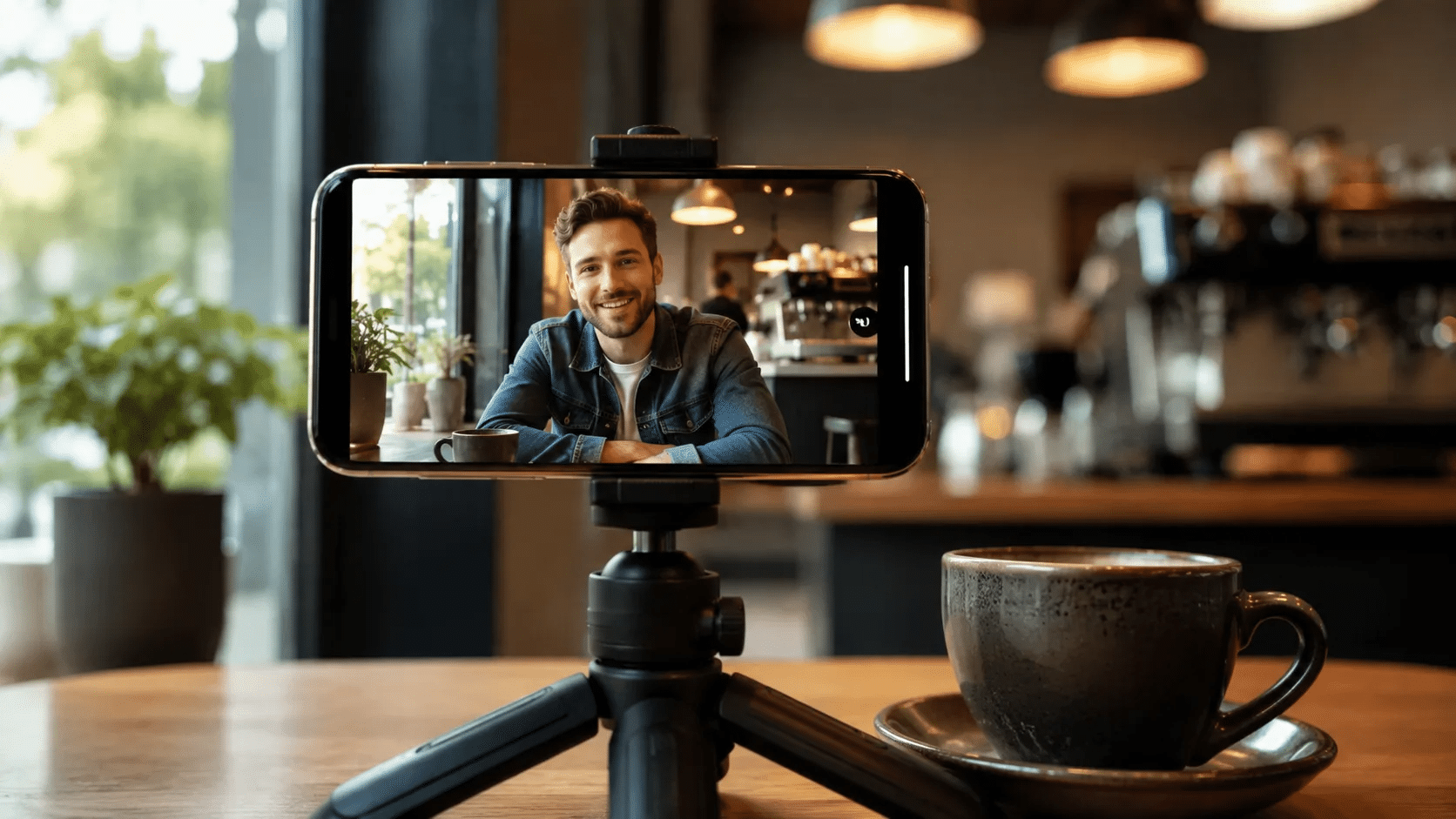
Overhead indoor lighting. Ceiling bulbs throw shadows down your face and add five tired years. Face a window instead. Soft daylight from the side or front is the most flattering light that exists, and it is free.
The bathroom mirror. The lighting is harsh, the background says nothing about you, and the raised-phone pose has been dead since 2019. If you want a solo shot, prop your phone, set a timer, and step back.
Clutter behind you. Laundry piles, dirty dishes, a car interior with a seatbelt across your chest. Viewers read backgrounds in a split second and the background is testifying about your life. Give it something decent to say.
Heavy filters. Skin-smoothing and eye-widening filters photograph as insecurity. Fix the light instead of the face.
Sunglasses in every photo. Eyes drive trust. One beach photo in shades is fine. Three is a pattern, and people wonder what you are hiding.
Tinder, Bumble, and Hinge Want Different Things
The same six photos do not perform equally everywhere, because each app rewards a different energy.
Tinder moves fast. Your first photo carries nearly all the weight, so lead with your strongest clear headshot and keep the set punchy. Bold beats subtle here.
Bumble skews toward effort. Since women open the conversation, photos that hand them an opener perform better: the travel shot with a story behind it, the dog, the kitchen mid-cook. Warm and approachable wins over moody and mysterious.
Hinge is built around prompts. Photos get liked and commented on individually, so every single image needs to survive on its own. That candid laugh photo you almost cut is often the one that collects likes.
If you refresh your set with a generator like datephotos.ai, sort the output by platform before uploading: the polished city shot to Hinge, the friendly coffee shot to Bumble, the strongest single frame to the front of Tinder. Same face, different lead, and each app gets what its users respond to.
One more platform note: recycling the exact same lineup across all three apps is a missed opportunity, but so is starting from scratch three times. Build one strong pool of ten or twelve keepers, then pull a slightly different six for each app. The overlap keeps you consistent. The differences let each app play to its strengths.
Test Like You Mean It
The step most people skip is measuring. You would not keep running an ad that gets no clicks, yet plenty of daters leave the same underperforming photo in the first slot for a year.
The simplest test costs nothing. Note your weekly match count with the current set, swap in the new lineup, and compare after two full weeks. Weekends skew activity up and Mondays skew it down, so anything shorter than two weeks is noise.
If you want faster feedback, ask three friends to rank your candidate photos, or better, ask one brutally honest friend of the gender you are trying to match with. Research on photo selection keeps finding the same thing: strangers and friends pick winning photos more accurately than the person in them. We judge our own pictures by how we hoped to look. Everyone else judges them by what is actually there.
And if a photo consistently starts conversations, protect it. People will tell you which image works by commenting on it. That photo has earned the front slot, even if it is not the one you would have chosen.
Run This Checklist Before You Upload
Two minutes of checking saves weeks of silence. Before your new set goes live:
- Is your face clearly visible in the first photo? No group shots, no sunglasses, no distance shots leading.
- Do you have four to six photos? Fewer looks like a hidden profile. More than eight dilutes your best ones.
- Is there a full-body shot? Its absence gets noticed.
- Does each photo add new information? Different setting, outfit, or activity. Delete the near-duplicates.
- Would a stranger learn two of your interests just from scrolling? If not, swap a mirror shot for a hobby shot.
- Do you actually look like this on an average day? The profile’s job is to get you to the date. Your face still has to close.
- Did someone else pick your best photo? We are reliably wrong about our own pictures. Ask one honest friend, or use a scoring tool, before you trust your own ranking.
One Afternoon, Then Leave It Alone
The whole fix fits in a single afternoon: shoot or generate a fresh set, cut everything blurry or repetitive, order the survivors with your clearest smiling headshot first, and run the checklist. Then stop tinkering for a month and let the data come in. If matches climb, you are done. If they do not, change one photo at a time so you can tell what moved the number. People swipe on the profile, but they show up for the person, so make the pictures honest enough that the date starts where the profile left off.