

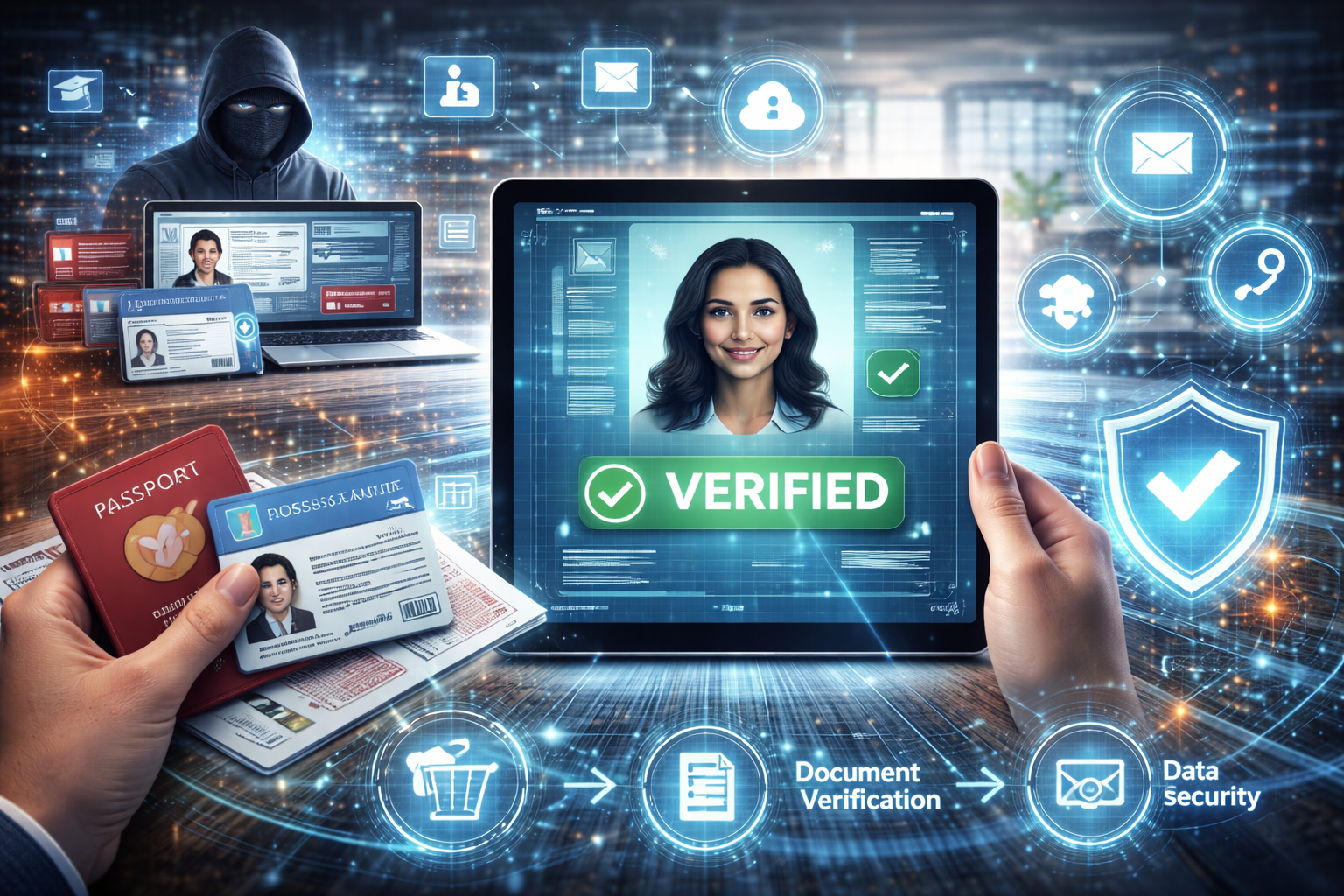
The rapid shift toward digital platforms has transformed the way people interact, learn, and conduct business. From opening a bank account to enrolling in an online course, nearly every important activity now takes place online. While this transition has brought convenience, it has also introduced new risks particularly around identity fraud.
As a result, identity verification has become a critical component of digital ecosystems. Businesses today must ensure that the individuals accessing their platforms are genuine, not only to comply with regulations but also to protect users and maintain trust.
Understanding how identity verification works and why it is essential can help both individuals and organizations navigate the digital world more safely.
Understanding Identity Verification
Identity verification refers to the process of confirming that a person is who they claim to be. Traditionally, this process involved manual checks of physical documents. However, with the rise of digital services, businesses now rely on automated systems powered by advanced identity verification software.
These systems analyze government-issued documents such as passports, national identity cards, and driver’s licenses. They also use biometric data, such as facial recognition, to match the user with their submitted documents. The integration of artificial intelligence has further improved the accuracy and speed of these systems, allowing businesses to verify identities in real time.
A modern identity verification service combines document analysis, biometric verification, and data validation to ensure a high level of accuracy while minimizing friction for users.
Why Identity Verification Matters More Than Ever
The importance of identity verification has grown significantly due to the increasing volume of online transactions. According to industry reports, digital fraud losses are expected to reach hundreds of billions of dollars globally in the coming years. A major contributor to this problem is the misuse of stolen or fabricated identities.
For businesses, failing to implement a reliable identity verification solution can lead to financial losses, regulatory penalties, and reputational damage. For users, weak verification systems increase the risk of identity theft and unauthorized access to personal data.
At the same time, consumers are becoming more aware of data privacy and security. Platforms that demonstrate strong identity verification practices are more likely to gain user trust and long-term loyalty.
The Growing Challenge of Fake IDs
One of the most pressing issues in digital security is the rise of fake ID usage. Fraudsters are no longer limited to simple document forgery. They now use advanced tools, including artificial intelligence, to create highly realistic fake identities.
These fake IDs can bypass outdated verification systems and are often used to open fraudulent accounts, conduct financial scams, or manipulate online platforms. In some cases, attackers combine real and fabricated data to create synthetic identities that are even harder to detect.
To counter this threat, businesses are turning to more sophisticated identity verification tools. These tools analyze not only the visual aspects of a document but also hidden data points, such as metadata and security features. By doing so, they can identify inconsistencies that would be impossible to detect through manual checks alone.
How Modern Identity Verification Works
The process of identity verification has evolved into a multi-layered system designed to maximize both security and efficiency.
It typically begins with document verification, where the user uploads an image of their identity document. The system examines the document’s structure, checks for signs of tampering, and verifies its authenticity against known templates.
The next step involves biometric verification. The user is asked to take a selfie or record a short video. The system compares this data with the photo on the document to confirm that they match. This step is crucial in preventing impersonation.
Liveness detection adds another layer of security by ensuring that the user is physically present during the verification process. This helps prevent the use of static images, recorded videos, or deepfake technology.
Finally, the system may perform data validation by cross-checking the user’s information against trusted databases. This comprehensive approach allows an identity verification service to deliver accurate results within seconds.
The Role of Technology in Strengthening Verification
Advancements in technology have significantly improved the effectiveness of identity verification systems. Artificial intelligence plays a central role in this transformation by enabling systems to learn from patterns and adapt to new types of fraud.
Machine learning algorithms can analyze large volumes of data to identify suspicious behavior. For example, they can detect unusual patterns in user activity or recognize subtle inconsistencies in documents that may indicate fraud.
Biometric technologies have also become more reliable and accessible. Facial recognition systems can now operate with high accuracy even in less-than-ideal conditions, such as low lighting or different camera angles.
These innovations have made identity verification software more robust, allowing businesses to stay ahead of increasingly sophisticated threats.
Applications Across Different Industries
Identity verification is no longer limited to financial institutions. Its applications span a wide range of industries, reflecting its importance in the modern digital landscape.
In the education sector, identity verification helps ensure that students participating in online courses and examinations are genuine. This is particularly important in maintaining academic integrity.
In the financial sector, verification is essential for compliance with regulations such as Know Your Customer (KYC) and Anti-Money Laundering (AML) requirements. Without proper verification, financial institutions are exposed to significant risks.
E-commerce platforms use identity verification to reduce fraudulent transactions and chargebacks. By confirming the identity of users, these platforms can create a safer shopping environment.
Social media platforms are also adopting verification measures to combat fake accounts and misinformation. Verified identities contribute to more authentic interactions and improved user experiences.
Balancing Security and User Experience
One of the key challenges in identity verification is finding the right balance between security and convenience. While strict verification processes can enhance security, they may also create friction for users.
Modern identity verification solutions address this challenge by streamlining the verification process. Automated systems reduce the time required for verification, while intuitive interfaces make the process easier for users to complete.
At the same time, businesses must ensure that their verification practices comply with data protection regulations. Transparency in how user data is collected and used is essential in building trust.
The Future of Identity Verification
The future of identity verification is closely tied to the development of digital identity systems. Governments and organizations are exploring the use of secure digital identities that can be stored and shared electronically.
These systems have the potential to simplify verification processes while maintaining high levels of security. Users may no longer need to repeatedly upload documents, as their verified identity can be reused across multiple platforms.
Artificial intelligence will continue to play a key role in shaping the future of identity verification. As fraud techniques evolve, AI-powered systems will become even more important in detecting and preventing threats.
Conclusion
Identity verification has become a fundamental part of the digital world. It protects users, enables secure transactions, and helps businesses build trust with their customers.
As the threat of fake ID usage and identity fraud continues to grow, the need for reliable identity verification tools will only increase. Businesses that invest in advanced identity verification solutions are better positioned to navigate the challenges of the digital era.
For individuals, understanding how identity verification works can lead to safer online behavior and more informed decisions. In a world where digital interactions are the norm, identity verification is not just a technical process it is a cornerstone of trust and security.
Leave a Comment