

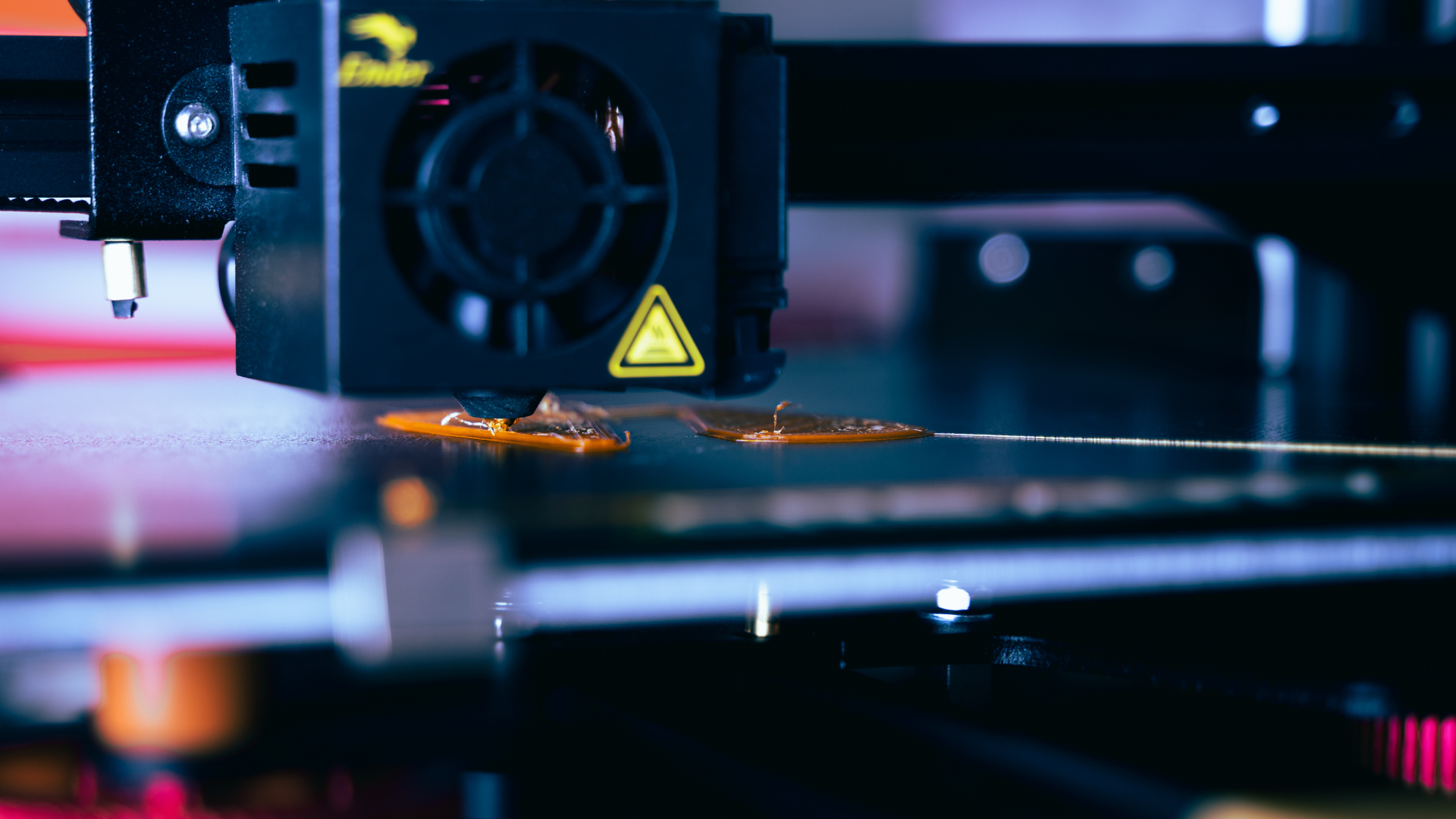
Something big is happening in manufacturing, and if you’ve been paying attention, you already feel it. Industries that spent decades locked into the same fabrication playbook are quietly tearing it up. Large-scale 3D printing isn’t the experimental curiosity it was ten years ago. It’s real, it’s fast, and it’s making traditional methods look genuinely expensive by comparison.
We’re talking about houses built in days. Aerospace components printed with the kind of precision that would’ve seemed science fiction not long ago. Businesses that once wouldn’t dream of moving away from conventional fabrication are now deep in additive territory, cutting costs, slashing timelines, and designing things that simply couldn’t exist before.
The large-scale 3D printing market hit USD 28.5 billion in 2024, fueled by companies hitting higher production volumes and significant cost savings. Let that sink in. This isn’t a niche corner of manufacturing anymore. It’s an industrial wave.
The Numbers Behind High-Volume 3D Printing Solutions
Professionals in construction, aerospace, healthcare, and automotive are actively hunting for an edge. Many are finding it through large 3d printing services, especially when projects involve complex components, impossible deadlines, or both.
Growth That’s Hard to Dismiss
The global large-format 3D printing services market sat at USD 23.5 billion in 2024. By 2032, analysts project it will hit USD 33.1 billion. That’s not speculative optimism, that’s steady, real demand from industries that’ve actually run the numbers. When manufacturers are rethinking production cost structures and capacity limits, high-volume 3D printing solutions keep showing up as the answer.
Where Adoption Is Actually Happening
Construction might be the most jaw-dropping example. ICON pushed wall-building costs down to around $20 per square foot, roughly 40% cheaper than conventional methods. In Europe, 270-square-meter structures have gone up in under a week using concrete printing. These aren’t pilot tests anymore. They’re repeatable processes running on actual job sites, delivered by large-scale 3D printing service companies that have turned what was once ambition into routine.
That’s not a projection, that’s a fundamental shift in how things get built. And the companies leading it? Worth knowing.
Who’s Actually Driving This Forward
Billions are flowing into this space. The innovators shaping it are doing genuinely remarkable work.
Construction and Real Estate
ICON’s Titan system doesn’t just print walls; it bundles robotics, software, proprietary materials, and operator training into one complete package. No guesswork for builders. COBOD, meanwhile, has partnered with TU Braunschweig to build robots that combine concrete printing with shotcreting.
That dual-function capability expands what’s possible on a single site dramatically. Industrial additive manufacturing providers have leveled up;p they’re no longer selling equipment. They’re selling end-to-end workflows built around real construction challenges.
Aerospace and Advanced Manufacturing
ORNL’s multiplexing nozzle system is one to watch. Better flow control, multi-material extrusion, and efficient scaling for aerospace and marine applications. The precision gains matter most he, particularly for parts where shaving weight without sacrificing structural integrity isn’t optional, it’s mandatory. Aerospace engineers are genuinely reimagining fabrication timelines because of large component 3D printing services that make those advanced designs not just feasible, but production-ready.
Honestly? These companies aren’t just pushing boundaries for the sake of it. They’re building a rock-solid business case in the process.
The Real Strategic Advantages You Should Care About
The business argument for large-scale additive manufacturing isn’t complicated. Cost, speed, and flexibility are all trending in the right direction, and they have been for a while.
Cost and Speed Gains Are Significant
Automotive manufacturers alone save $1.2 billion annually on tooling costs through 3D printing. That’s not a rounding error. Prototyping cycles that once took weeks now take days. On construction sites, large-layer-height concrete printing cuts labor time meaningfully, and that adds up fast.
Design Freedom and Material Range
Multiplexing extrusion unlocks bead geometries that conventional manufacturing simply can’t produce. Large-format systems are also starting to support embedded electronics during the print process itself, a development that’s especially relevant in robotics and medical devices. Industrial additive manufacturing providers are putting serious resources into material science to keep pace with these demands.
Sustainability Isn’t Just a Buzzword Here
Real concrete printing delivers 8–10 times lower material costs than synthetic alternatives, with stronger structural outcomes and reduced environmental impact. There’s also a real push toward decentralized, regional production printing closer to the job site, reducing supply chain risk, cutting emissions. Many construction 3D printing companies are building sustainability and localization directly into their operating models now, not as an afterthought.
The Operational Innovations Making Scale Actually Work
Smart manufacturing and additive technology are converging. The result is better output quality and fewer operational headaches.
Smart Factory Integration
3D printing systems are now embedded into broader factory ecosystems connected to ERP and MES platforms, backed by real-time monitoring, and linked to digital inventory management. Production becomes more predictable. More auditable. Less chaotic.
Automation and AI-Assisted Quality
AI-powered SLS systems are improving consistency while predictive maintenance cuts downtime. Closed-loop material recovery reduces waste and lowers operating costs. These aren’t luxury features anymore; they’re core capabilities for high-volume 3D printing solutions across serious industrial applications.
Regional Opportunity Is Real
North America leads large-format adoption right now, but Asia-Pacific is growing fastest. Interestingly, significant gaps remain in underserved U.S. regions, places where construction 3D printing companies can establish strong regional footholds. Large component 3D printing services positioned smartly in these markets are sitting on substantial unmet demand.
Common Questions Worth Answering
1. What separates large-scale 3D printing service companies from standard providers?
Build volume, material complexity, and industrial-grade tolerances plus integrated engineering support, post-processing, and compliance documentation that smaller providers typically don’t offer.
2. Are large component 3D printing services genuinely cost-effective?
For complex geometries, low-to-mid runs, and rapid iterations, yes, often significantly. Tooling elimination alone delivers strong ROI in aerospace and automotive contexts.
3. How do high-volume 3D printing solutions connect with Industry 4.0?
Through ERP integration, real-time monitoring, AI quality control, and digital inventory systems that make additive manufacturing a traceable, data-driven process, not a standalone step.
Where Does This Leave You?
Large-scale 3D printing isn’t sitting around waiting for industries to catch up. It’s already reshaping construction, parts manufacturing, and supply chain strategy right now, not eventually. The market growth is real. The concrete houses built in the past are real. The billion-dollar savings are real.
Businesses that take this seriously today will have a meaningful head start. Those who wait well, the gap tends to compound. The technology is genuinely ready. The question worth asking yourself isn’t whether this applies to your industry. It almost certainly does. The question is how soon you act on it.