

Why Climbing Kilimanjaro Teaches Language Better Than a Classroom
Anyone learning English seriously eventually discovers a quiet frustration.
You can study grammar.
You can memorise vocabulary.
You can pass tests.
And still feel uncertain when English has to function in the real world.
That is because language is not mastered in isolation. It is mastered when it has to work.
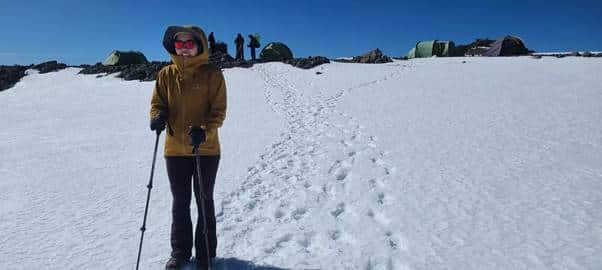
English becomes clear when it is necessary
When English is optional, people hide behind complexity. When it is necessary, communication becomes precise.
This is exactly what happens on Mount Kilimanjaro.
A Kilimanjaro climb brings together people from many countries, cultures, and backgrounds. English becomes the shared working language. Not academic English, but practical English:
- Clear instructions
- Simple questions
- Honest feedback
- Encouragement under pressure
There is no room for decorative language. Meaning matters more than style.
This is where learners often experience a breakthrough.
Why practical environments accelerate learning
On the mountain, daily routines depend on understanding and being understood. Hydration schedules, meal times, health checks, and pacing all require communication.
Experienced teams such as Team Kilimanjaro deliberately keep communication simple and consistent. This benefits safety, but it also benefits learners.
Repeated exposure to:
- Clear verbs
- Functional vocabulary
- Natural rhythm
builds confidence faster than textbooks alone.
Language becomes a tool, not a subject.
Thinking in English comes from shared experience
One of the hardest steps in language learning is moving from translation to thinking directly in English.
Shared physical experiences help this transition.
When you are walking for hours, breathing thin air, and focusing on hydration and rest, the brain simplifies. People stop translating internally. They respond.
Many learners report that they begin to think in English during the climb, not because they planned to, but because it was the most efficient way to operate.
That efficiency stays with them.
Do not end the lesson too soon
After the climb, many people leave immediately. But Tanzania offers a rare opportunity to continue learning in a calmer, more observational setting.
The northern safari circuit provides long hours of shared attention, discussion, and reflection. In places like the Serengeti, Ngorongoro Crater, and Tarangire National Park, conversation slows and deepens.
This is where learners practise:
- Describing what they see
- Asking thoughtful questions
- Sharing impressions and emotions
Because Team Kilimanjaro Safaris focuses only on the northern circuit, there is time for this kind of engagement. No rushing. No script.

Language that stays with you
Classrooms build foundations. Practice builds fluency.
But real-world environments like Kilimanjaro and Tanzania’s wild north do something different. They embed language into memory.
You do not just remember the word.
You remember the moment you needed it.
That is how English stops being something you study and becomes something you use.
And once language reaches that point, it rarely slips away again.