
In this blog post, you will learn the main uses of “I’m” in English with helpful examples. “I’m” is the short form of “I am” and is commonly used to talk about yourself, your actions, and your feelings. Understanding how to use “I’m” correctly will help you speak more naturally and confidently.
👉 To improve your grammar step by step, visit our grammar category for clear and easy lessons.
I AM in English
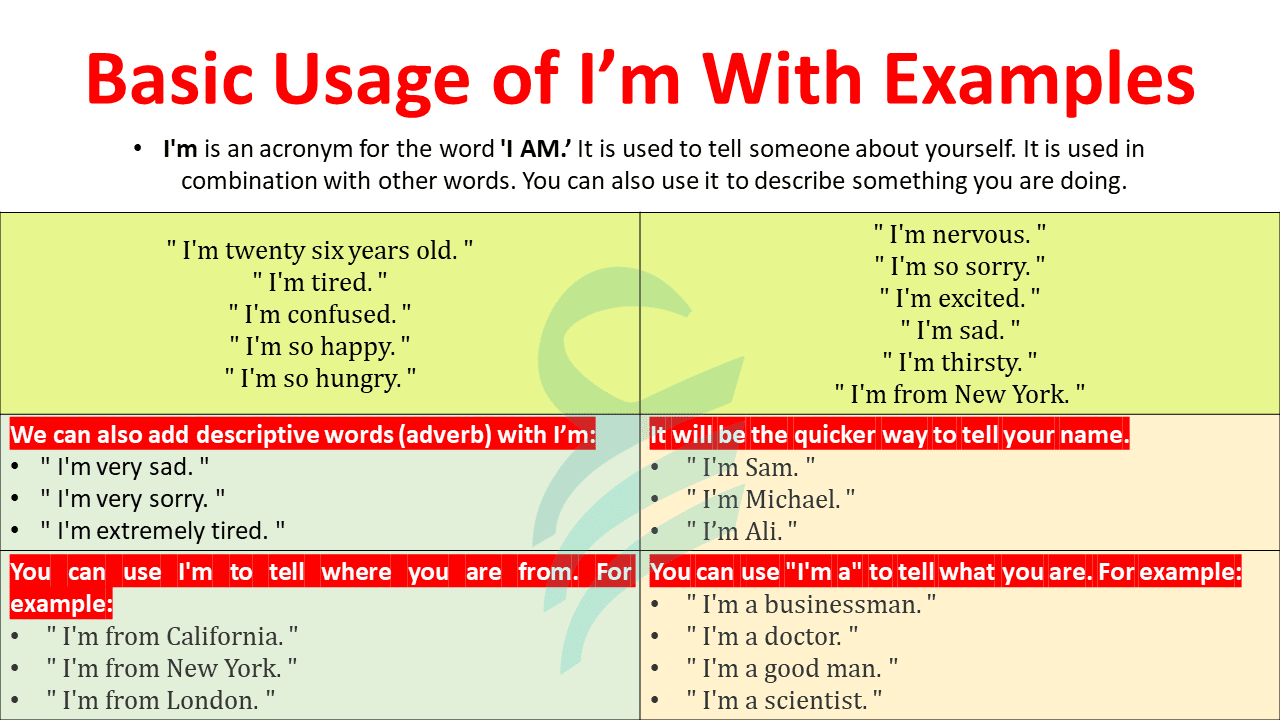
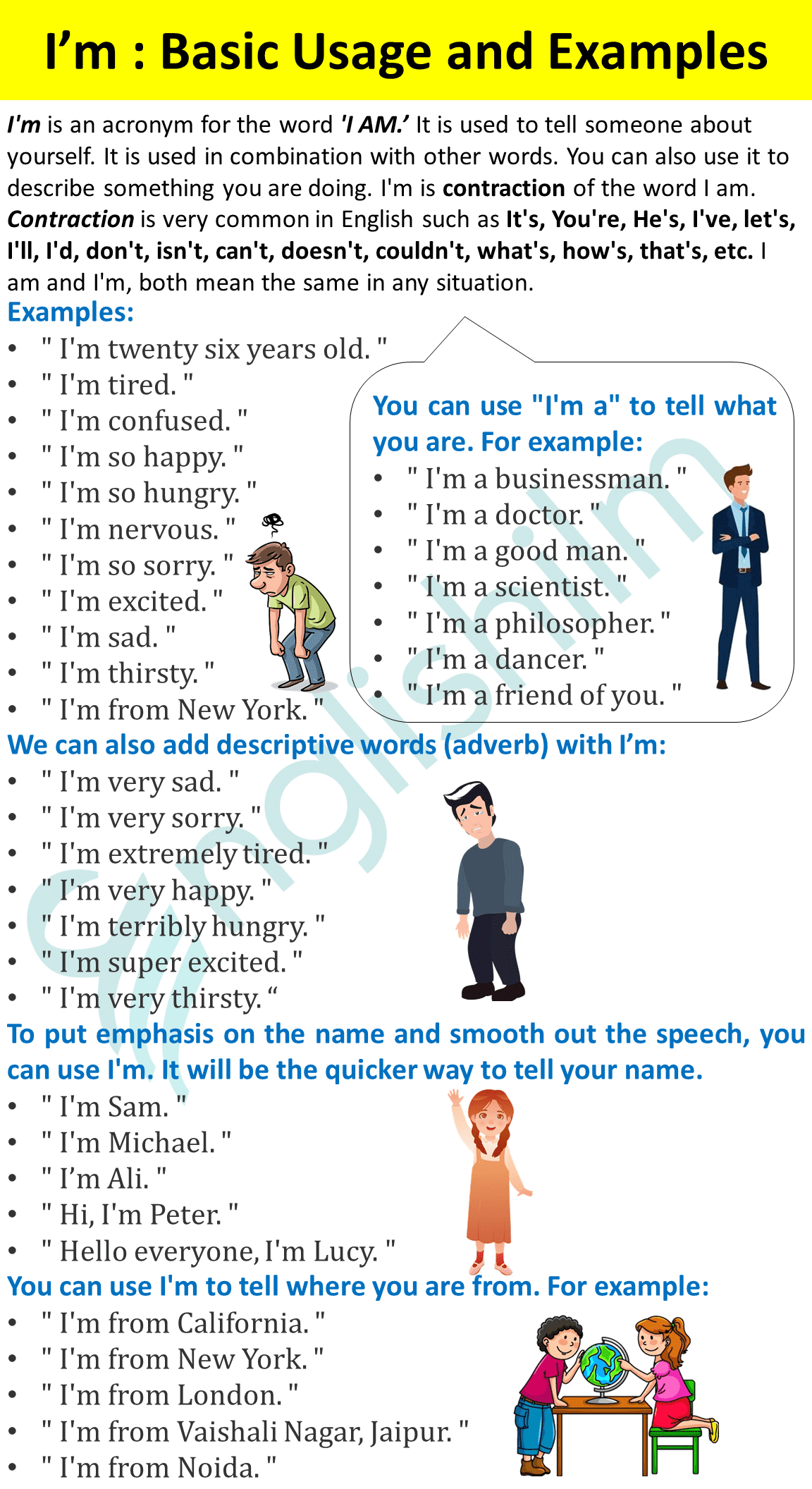
‘I’m’ is a contraction of the word I am. Contraction is very common in English, such as it’s, you’re, he’s, I’ve, let’s, I’ll, I’d, don’t, isn’t, can’t, doesn’t, couldn’t, what’s, how’s, that’s, etc. I am and I’m” both mean the same in any situation.
Examples:
- I’m twenty-six years old.
- I’m tired.
- I’m confused.
- I’m so happy.
- I’m so hungry.
- I’m nervous.
- I’m so sorry.
- I’m excited.
- I’m sad.
- I’m thirsty.
- I’m from New York.
We can also add descriptive words (adverbs) with I’m.
For example:
- I’m very sad.
- I’m very sorry.
- I’m extremely tired.
- I’m very happy.
- I’m terribly hungry.
- I’m super excited.
- I’m very thirsty.
To put emphasis on the name and smooth out the speech, you can use I’m.
It will be the quickest way to tell your name:
- I’m Sam.
- I’m Michael.
- I’m Sonoo.
- Hi, I’m Peter.
- Hello everyone, I’m Lucy.
You can use I’m to tell where you are from.
For example:
- I’m from California.
- I’m from New York.
- I’m from London.
- I’m from Vaishali Nagar, Jaipur.
- I’m from Noida.
You can use “I’m a” to tell what you are.
For example:
- I’m a businessman.
- I’m a doctor.
- I’m a good man.
- I’m a scientist.
- I’m a philosopher.
- I’m a dancer.
- I’m a friend of yours.
Read More