

Start With the Load, Not the Equipment
The most common mistake in off-grid solar system design is starting with equipment — browsing inverter specifications and panel ratings before the energy requirements have been properly defined. Equipment selection is the last step in the design process, not the first. Everything else follows from a thorough understanding of what the system needs to do.
Step One: The Load Assessment
List every electrical device that will be powered by the system. For each device, note its rated wattage (from the nameplate or specifications) and estimate how many hours per day it will operate. Multiplying wattage by daily hours gives the watt-hours per day for each device. Sum these across all devices for total daily energy demand.
Pay particular attention to motor loads — refrigerators, pumps, fans, power tools — and note both their running wattage and their startup surge wattage. The surge figure determines the minimum inverter capacity required; the running wattage determines the battery draw rate.
Step Two: Determining Battery Capacity
The battery bank needs to store enough energy to power the household through periods when solar generation isn’t sufficient — primarily overnight, but also through cloudy days. A common design approach is to size for two to three days of autonomy — the number of days the system can run from battery alone, without any solar input, before reaching the minimum acceptable state of charge.
For a household using 5 kilowatt-hours per day with a target of two days autonomy and a maximum usable depth of discharge of 80% (appropriate for lithium iron phosphate), the required battery bank capacity would be approximately 12.5 kilowatt-hours. Adjust this calculation for the specific battery chemistry and depth of discharge limit in use.
Step Three: Sizing the Solar Array
The solar array needs to generate enough energy to meet daily household consumption plus replace any energy drawn from the battery the previous night, while also handling the least productive solar days of the year. Peak sun hours — the number of hours per day equivalent to full standard test conditions irradiance — are the key variable, and these vary significantly by location and season.
Using the worst-month peak sun hours for the installation location gives a conservative array size that ensures the system remains viable throughout the year. Divide the total daily energy requirement by the worst-month peak sun hours, then add a system efficiency factor of around 1.25 to account for inverter, wiring, and battery losses, to arrive at the required solar array capacity in kilowatts.
Step Four: Selecting the Off-Grid Solar Inverter
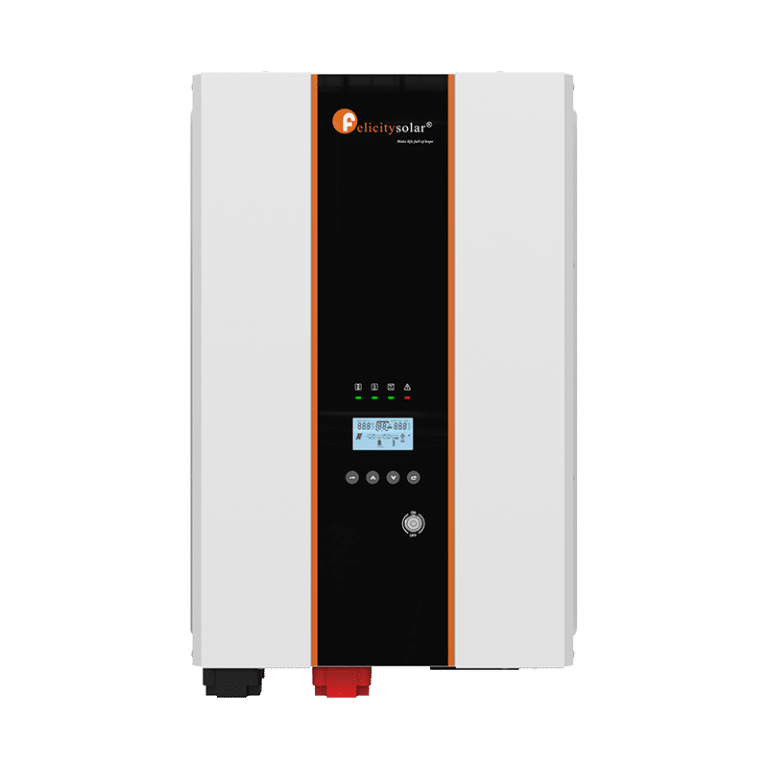
With the load profile defined and the battery and solar sizes determined, the off-grid solar inverter specification follows naturally. The inverter’s continuous AC output rating must exceed the maximum simultaneous running load. Its surge capacity must handle the highest single-device startup demand. Its battery input voltage must match the battery bank configuration. And its solar charge controller capacity (if integrated) or its MPPT inputs (for separate charge controllers) must accommodate the array size.
Choosing an inverter with some headroom above the calculated minimums — particularly on continuous output rating — is prudent for accommodating future load additions and for keeping the unit in a thermally comfortable operating range throughout its service life.